"Health" contributor Dr. Raj on the "Today" show Feb. 13, discussing tips on fighting the flu
by Ross Weale
In the following segment, Roshini Raj, MD, of Health magazine describes flu symptoms and talks about whether you can still get that shot.
DR. ROSHINI RAJ
Roshini Raj, MD, a Health magazine contributor and part of the magazine's Health Expert Network, is board-certified in gastroenterology and internal medicine with degrees from the New York University School of Medicine and Harvard University. Currently Dr. Raj is an attending physician at NYU Medical Center's Tisch Hospital in New York City. She also serves as an assistant professor at the NYU School of Medicine, and she has a special interest in women's health and cancer screening. She has also published several research articles on colon-cancer screening.
Dr. Raj has discussed health topics on numerous television outlets including NBC's Today show, ABC's Good Morning America, CNN, FOX News, and Discovery Health. She has been quoted in publications such as the New York Times, the Wall Street Journal, Men's Health, Women's Health, and Fitness on the state of health care and other health news of the day. Dr. Raj is often called upon to explain and demystify complicated health topics.
more discussion: Forum· Addiction Forum · Ask the Doctors Forum · Ayurveda Forum · Ayurvedic & Thai Herbs Forum · Colon Cleansing Forum · Dental Forum · Diabetes Forum · Diet Forum · General Cleansing Forum · Hepatitis A, B. C Forum · Integrated Medicine Forum · Live Blood Analysis Forum · Ozone-Oxygen-Forum · pH - Alkaline - Acidity Forum · Weight Loss Forum
Showing posts with label Ayurvedic Medicine. Show all posts
Showing posts with label Ayurvedic Medicine. Show all posts
Monday, April 07, 2008


Thursday, March 27, 2008
Calcium Scans Help Predict Coronary Risk
 (HealthDay News) -- Scanning the heart arteries for calcium deposits can help predict future cardiac problems, a new study shows, but experts aren't sure that adding such scans to routine checkups would be worth the cost.
"It has been shown to be predictive" of potential heart trouble, said Dr. Diane Bild, deputy director of the division of prevention and population sciences at the U.S. National Heart, Lung, and Blood Institute, which funded the study. "Whether it is actually beneficial to the people who are screened has not been shown."
A calcium scan using computed tomography (CT) costs $300 to $600. These scans look for calcification -- hardening of the arteries caused by high blood fats and calcium deposits that can eventually cause blood vessel blockage. The scan is a potential competitor for much less expensive tests for coronary risk, such as blood cholesterol and blood pressure readings.
The new study involved more than 6,700 American men and women across a number of racial and ethnic groups -- white, black, Chinese, Hispanic -- who were followed for an average of 3.8 years. It found that the risk of a coronary event was nearly 10 times higher for those with the highest calcium deposit scores than for those with the lowest.
"This study was launched in 1999, a time when there was a lot of interest in whether this new test could predict coronary artery disease," Bild said. "A lot of studies have been done in predominantly white populations. This was one of our efforts to include minority groups."
The study does show that calcium scanning "modestly improves predictions over traditional risk factors," she said. "Several pieces of information are needed in order to understand whether this is clinically useful."
The findings are published in the March 27 issue of the New England Journal of Medicine.
The cost of such scans could be reduced, according to a statement from study lead author Dr. Robert Detrano, professor of radiological sciences at the University of California, Irvine, who is traveling in China. Scans have been done for just $30 in China, Detrano noted.
"It is mostly an issue of cost," said Dr. William S. Weintraub, chief of cardiology at the Christiana Health Care System, the largest health-care system in Delaware, who wrote an accompanying editorial in the journal. "It does add to our discrimination, but it costs a couple of hundred dollars and we're not sure how you use it."
Reducing the cost would make the test more usable, and "more epidemiological studies showing its value in risk prediction would be of great value," Weintraub said.
"But I'd be uncomfortable now with the idea of recommending this for everybody, or even defining a middle ground where we are unsure how we treat people so they get this first," he said.
A calcium scan also carries some risk, since it exposes a person to radiation, Bild noted. "It would be worth it if the benefit outweighed that risk," she said. "We don't clearly have both sides of that equation established."
More information
For more on coronary calcium scans, visit the U.S. Heart, Lung, and Blood Institute.
more discussion: Forum· Addiction Forum · Ask the Doctors Forum · Ayurveda Forum · Ayurvedic & Thai Herbs Forum · Colon Cleansing Forum · Dental Forum · Diabetes Forum · Diet Forum · General Cleansing Forum · Hepatitis A, B. C Forum · Integrated Medicine Forum · Live Blood Analysis Forum · Ozone-Oxygen-Forum · pH - Alkaline - Acidity Forum · Weight Loss Forum
Sunday, March 16, 2008
Anxiety Helps Elderly Women Live Longer
(HealthDay News) -- Higher anxiety levels may help elderly women live longer, but may harm older men, U.S. research shows.
A team at the Cleveland Clinic and Case Western Reserve University followed 1,000 seniors in three Florida retirement communities for up to 15 years.
They found that women with higher levels of anxiety at the start of the study lived longer than others. Year-to-year changes in anxiety levels didn't appear to affect women's survival, either.
In contrast to women, men with higher anxiety levels at the start of the study were more likely to die earlier, the researchers said.
"Our research indicates that anxiety may have a protective effect on women, possibly causing them to seek medical attention more frequently than men," Dr. Jianping Zhang, of the department of psychiatry and psychology at the Cleveland Clinic, said in a prepared statement. "In contrast, increasing anxiety over time is more detrimental to men. Additional research is needed to better understand the mechanisms and effects of anxiety in men and women."
The study is noteworthy due to the large amount of data collected over a long period of time, noted co-researcher Dr. Leo Pozuelo, who is also in the department of psychiatry and psychology at the Cleveland Clinic.
"Baseline higher anxiety could have led the female study participants to be more active and health-conscious," Pozuelo said in a prepared statement. "We are not certain of the absolute connection between anxiety and mortality, but this data set shows there may be a gender difference."
The study was to be presented Thursday at the annual meeting of the American Psychosomatic Society.
More information
The American Academy of Family Physicians has more about anxiety.
more discussion: Forum· Addiction Forum · Ask the Doctors Forum · Ayurveda Forum · Ayurvedic & Thai Herbs Forum · Colon Cleansing Forum · Dental Forum · Diabetes Forum · Diet Forum · General Cleansing Forum · Hepatitis A, B. C Forum · Integrated Medicine Forum · Live Blood Analysis Forum · Ozone-Oxygen-Forum · pH - Alkaline - Acidity Forum · Weight Loss Forum
A team at the Cleveland Clinic and Case Western Reserve University followed 1,000 seniors in three Florida retirement communities for up to 15 years.
They found that women with higher levels of anxiety at the start of the study lived longer than others. Year-to-year changes in anxiety levels didn't appear to affect women's survival, either.
In contrast to women, men with higher anxiety levels at the start of the study were more likely to die earlier, the researchers said.
"Our research indicates that anxiety may have a protective effect on women, possibly causing them to seek medical attention more frequently than men," Dr. Jianping Zhang, of the department of psychiatry and psychology at the Cleveland Clinic, said in a prepared statement. "In contrast, increasing anxiety over time is more detrimental to men. Additional research is needed to better understand the mechanisms and effects of anxiety in men and women."
The study is noteworthy due to the large amount of data collected over a long period of time, noted co-researcher Dr. Leo Pozuelo, who is also in the department of psychiatry and psychology at the Cleveland Clinic.
"Baseline higher anxiety could have led the female study participants to be more active and health-conscious," Pozuelo said in a prepared statement. "We are not certain of the absolute connection between anxiety and mortality, but this data set shows there may be a gender difference."
The study was to be presented Thursday at the annual meeting of the American Psychosomatic Society.
More information
The American Academy of Family Physicians has more about anxiety.
more discussion: Forum· Addiction Forum · Ask the Doctors Forum · Ayurveda Forum · Ayurvedic & Thai Herbs Forum · Colon Cleansing Forum · Dental Forum · Diabetes Forum · Diet Forum · General Cleansing Forum · Hepatitis A, B. C Forum · Integrated Medicine Forum · Live Blood Analysis Forum · Ozone-Oxygen-Forum · pH - Alkaline - Acidity Forum · Weight Loss Forum
Wednesday, March 05, 2008
Health Tip: When Caregiving Becomes Too Stressful
 (HealthDay News) - Caring for a loved one who needs extensive help can be physically and emotionally draining. To continue providing loving care, it's important to monitor your own well-being, too.
Here are some warning signs of caregiver stress, courtesy of the American Academy of Family Physicians:
- Feeling unusually angry or resentful toward the person you care for, yourself or your family.
- Withdrawing from social activities.
- Anxiety.
- Sleeping too much or having difficulty sleeping.
- Feeling irritable.
- Being sick frequently.
more discussion: Forum· Addiction Forum · Ask the Doctors Forum · Ayurveda Forum · Ayurvedic & Thai Herbs Forum · Colon Cleansing Forum · Dental Forum · Diabetes Forum · Diet Forum · General Cleansing Forum · Hepatitis A, B. C Forum · Integrated Medicine Forum · Live Blood Analysis Forum · Ozone-Oxygen-Forum · pH - Alkaline - Acidity Forum · Weight Loss Forum
Friday, December 28, 2007
Terriers Join Fight Against a Killer Disease in Humans
(HealthDay News) -- A feisty breed of terrier could stop scientists from barking up the wrong tree as they research a deadly lung disease in humans.
The illness, called idiopathic pulmonary fibrosis (IPF), affects 128,000 Americans, is typically fatal within three years of diagnosis, and kills more than 40,000 people in the United States annually -- a death toll equivalent to that of breast cancer.
A fatal condition that looks remarkably like IPF also strikes the diminutive West Highland White terrier ("Westie"), however. And recently, medical scientists from the human and veterinarian worlds met for the first time to share information and pool resources against a mysterious killer.
"People may be a little startled at first to learn about this idea -- 'You're kidding me, you actually think there's promise in studying this dog to help my Dad with this disease?' And the answer is -- 'Yes'," said Mark Shreve, chief operating officer of the patient advocacy group Coalition for Pulmonary Fibrosis, based in San Jose, Calif.
Because the Westie is so tightly bred, and because the illness progresses faster in dogs than humans, it is conceivable that dog-based research might yield valuable clues to the genetics or environmental factors that trigger pulmonary fibrosis in both species, experts explained.
"And if it transpires that it is the same disease, then obviously the options are limitless as to how we can look at information from dogs and use it to understand the disease in humans and vice versa," said Dr. Brendan Corcoran, director of the Hospital for Small Animals at the University of Edinburgh, Scotland, and a pioneer in researching pulmonary fibrosis in Westies.
According to Shreve, most people find it hard to believe that a disease like IPF even exists amid the wonders of modern medicine.
"We are dealing here with one of the few diseases left on the planet for which there are no proven causes and no treatments," he said.
Idiopathic pulmonary fibrosis occurs spontaneously, although certain factors -- such as smoking or exposure to airborne toxins -- do raise risks for the illness. "IPF is a progressive scarring process in the lungs that gradually robs a person of the ability to breathe," Shreve explained.
Some sort of signaling seems to go awry at the cellular level, he said, converting normal, expansive lung tissue into stiff, fibrotic scar tissue.
"Once it starts in patients with IPF, your body just never sends a signal to stop that scar tissue from being produced," Shreve said. "This scar tissue is obviously not lung tissue that is able to process oxygen."
There have so far been very few promising leads in discovering the root causes of IPF, said Dr. Jesse Roman, one of the country's leading researchers in the disease and a professor of medicine at Emory University in Atlanta.
"Studies do suggest very specific [cellular] pathways, and there's a number of molecules that everybody is tuned into," he said. "But how you block them and how they relate to what happens in humans, that's less clear."
So, scientists are turning to creative new ways of looking at IPF.
Cross-talk between scientists worldwide led to the first-ever summit on the disease that included both veterinary and human medical researchers. The meeting was held in October on the campus of Purdue University in West Lafayette, Ind., and was attended by Corcoran, Roman and others. It was sponsored by the Westie Foundation of America and the American Kennel Club (AKC) Canine Health Foundation.
Westies, which grow to just under a foot in length, are described by the AKC as "courageous and self-reliant, but friendly."
"They're a very popular pet because of their size and their nature," Corcoran said.
However, pulmonary fibrosis does pop up in the breed with regularity, first revealing itself as excessive panting and shortness of breath. The illness also tends to develop in the terriers' late middle-age (about eight or nine years), mimicking its typical onset in humans at about age 50 to 60.
Westies inevitably succumb to the lung fibrosis about a year and a half after their diagnosis, Corcoran said.
Still, "there's still the contentious issue of whether this is the same disease as occurs in humans," he said. The exact prevalence of the disease among Westies is also unclear, he added. That means the first aim of Westies-centered research will be epidemiological -- studying disease prevalence and gathering a core of dogs and their owners that researchers might follow going forward.
Getting postmortem samples of canine lung tissue will also be crucial to a better understanding of the causes of the disease, Corcoran said. But that has its own challenges, he added.
"Getting owners to volunteer their dogs for necropsy is always problematic," he said. In fact, it's often "harder in many instances to get lung pathology samples from dogs than it is from humans," Corcoran said.
"However, one of our plans is to try and build up a group of concerned owners who will volunteer to donate their dog when that day arrives. We've been having some discussions on that already with our colleagues in America," Corcoran said. "Hopefully, the more publicity that we get with this condition, the more we may get owners coming forward and volunteering their dogs for research."
Corcoran and the other experts said that a cure for IPF is definitely not around the corner -- the disease has been as tenacious in keeping its secrets as, well, a terrier.
But Westies may be just the foe in the fight against IPF requires. Corcoran pointed out that the dogs' tight breeding means genetic research could yield important clues. And their shorter lifespan -- a seventh of that of humans -- means scientists can watch the disease in "fast-forward," which might also speed research.
Westies are also free of certain confounding factors, such as smoking, that often muddle human research. "The dogs might turn out to have a very pure form of the disease that allows you to investigate the disease itself and not worry about other factors," Corcoran noted.
Given all of this, "why wouldn't you look at a Westie and research how the disease progresses?" said patient-advocate Shreve.
"We think it's a very creative approach to trying to help out humans," he said, "and our patients don't really have the patience to hang around waiting for a miracle.
More information
To learn much more about IPF, visit the Coalition for Pulmonary Fibrosis.
more discussion: Forum
· Addiction Forum · Ask the Doctors Forum · Ayurveda Forum · Ayurvedic & Thai Herbs Forum · Colon Cleansing Forum · Dental Forum · Diabetes Forum · Diet Forum · General Cleansing Forum · Hepatitis A, B. C Forum · Integrated Medicine Forum · Live Blood Analysis Forum · Ozone-Oxygen-Forum · pH - Alkaline - Acidity Forum · Weight Loss Forum
The illness, called idiopathic pulmonary fibrosis (IPF), affects 128,000 Americans, is typically fatal within three years of diagnosis, and kills more than 40,000 people in the United States annually -- a death toll equivalent to that of breast cancer.
A fatal condition that looks remarkably like IPF also strikes the diminutive West Highland White terrier ("Westie"), however. And recently, medical scientists from the human and veterinarian worlds met for the first time to share information and pool resources against a mysterious killer.
"People may be a little startled at first to learn about this idea -- 'You're kidding me, you actually think there's promise in studying this dog to help my Dad with this disease?' And the answer is -- 'Yes'," said Mark Shreve, chief operating officer of the patient advocacy group Coalition for Pulmonary Fibrosis, based in San Jose, Calif.
Because the Westie is so tightly bred, and because the illness progresses faster in dogs than humans, it is conceivable that dog-based research might yield valuable clues to the genetics or environmental factors that trigger pulmonary fibrosis in both species, experts explained.
"And if it transpires that it is the same disease, then obviously the options are limitless as to how we can look at information from dogs and use it to understand the disease in humans and vice versa," said Dr. Brendan Corcoran, director of the Hospital for Small Animals at the University of Edinburgh, Scotland, and a pioneer in researching pulmonary fibrosis in Westies.
According to Shreve, most people find it hard to believe that a disease like IPF even exists amid the wonders of modern medicine.
"We are dealing here with one of the few diseases left on the planet for which there are no proven causes and no treatments," he said.
Idiopathic pulmonary fibrosis occurs spontaneously, although certain factors -- such as smoking or exposure to airborne toxins -- do raise risks for the illness. "IPF is a progressive scarring process in the lungs that gradually robs a person of the ability to breathe," Shreve explained.
Some sort of signaling seems to go awry at the cellular level, he said, converting normal, expansive lung tissue into stiff, fibrotic scar tissue.
"Once it starts in patients with IPF, your body just never sends a signal to stop that scar tissue from being produced," Shreve said. "This scar tissue is obviously not lung tissue that is able to process oxygen."
There have so far been very few promising leads in discovering the root causes of IPF, said Dr. Jesse Roman, one of the country's leading researchers in the disease and a professor of medicine at Emory University in Atlanta.
"Studies do suggest very specific [cellular] pathways, and there's a number of molecules that everybody is tuned into," he said. "But how you block them and how they relate to what happens in humans, that's less clear."
So, scientists are turning to creative new ways of looking at IPF.
Cross-talk between scientists worldwide led to the first-ever summit on the disease that included both veterinary and human medical researchers. The meeting was held in October on the campus of Purdue University in West Lafayette, Ind., and was attended by Corcoran, Roman and others. It was sponsored by the Westie Foundation of America and the American Kennel Club (AKC) Canine Health Foundation.
Westies, which grow to just under a foot in length, are described by the AKC as "courageous and self-reliant, but friendly."
"They're a very popular pet because of their size and their nature," Corcoran said.
However, pulmonary fibrosis does pop up in the breed with regularity, first revealing itself as excessive panting and shortness of breath. The illness also tends to develop in the terriers' late middle-age (about eight or nine years), mimicking its typical onset in humans at about age 50 to 60.
Westies inevitably succumb to the lung fibrosis about a year and a half after their diagnosis, Corcoran said.
Still, "there's still the contentious issue of whether this is the same disease as occurs in humans," he said. The exact prevalence of the disease among Westies is also unclear, he added. That means the first aim of Westies-centered research will be epidemiological -- studying disease prevalence and gathering a core of dogs and their owners that researchers might follow going forward.
Getting postmortem samples of canine lung tissue will also be crucial to a better understanding of the causes of the disease, Corcoran said. But that has its own challenges, he added.
"Getting owners to volunteer their dogs for necropsy is always problematic," he said. In fact, it's often "harder in many instances to get lung pathology samples from dogs than it is from humans," Corcoran said.
"However, one of our plans is to try and build up a group of concerned owners who will volunteer to donate their dog when that day arrives. We've been having some discussions on that already with our colleagues in America," Corcoran said. "Hopefully, the more publicity that we get with this condition, the more we may get owners coming forward and volunteering their dogs for research."
Corcoran and the other experts said that a cure for IPF is definitely not around the corner -- the disease has been as tenacious in keeping its secrets as, well, a terrier.
But Westies may be just the foe in the fight against IPF requires. Corcoran pointed out that the dogs' tight breeding means genetic research could yield important clues. And their shorter lifespan -- a seventh of that of humans -- means scientists can watch the disease in "fast-forward," which might also speed research.
Westies are also free of certain confounding factors, such as smoking, that often muddle human research. "The dogs might turn out to have a very pure form of the disease that allows you to investigate the disease itself and not worry about other factors," Corcoran noted.
Given all of this, "why wouldn't you look at a Westie and research how the disease progresses?" said patient-advocate Shreve.
"We think it's a very creative approach to trying to help out humans," he said, "and our patients don't really have the patience to hang around waiting for a miracle.
More information
To learn much more about IPF, visit the Coalition for Pulmonary Fibrosis.
more discussion: Forum
· Addiction Forum · Ask the Doctors Forum · Ayurveda Forum · Ayurvedic & Thai Herbs Forum · Colon Cleansing Forum · Dental Forum · Diabetes Forum · Diet Forum · General Cleansing Forum · Hepatitis A, B. C Forum · Integrated Medicine Forum · Live Blood Analysis Forum · Ozone-Oxygen-Forum · pH - Alkaline - Acidity Forum · Weight Loss Forum
Tuesday, December 25, 2007
Realistic Expectations Help Ward Off Holiday Depression
(HealthDay News) -- For many people, heightened expectations, financial and social stress, and memories of lost loved ones can cause tension, anxiety and sadness.
All of that can lead to seasonal blues during the holidays, says an expert at Cedars-Sinai Medical Center.
For example, people who expect difficult relationships to improve just because it's Christmas are likely to be disappointed.
"In terms of relationships, nothing magical 'just happens' during the holidays," Dr. Mark H. Rapaport, chair of the department of psychiatry and behavioral neurosciences at Cedars-Sinai, said in a prepared statement.
"If you don't get along with your in-laws during the year, you're probably not going to get along with them during the holiday season, either. Understanding that before you go to visit them can improve how you'll handle your feelings while you're there," he said.
Planning ahead can help people cope with many sources of holiday-related stress and anxiety.
"If you plan ahead and focus on what you really enjoy about the season, you can spend more time 'living in the moment,' which is the key to getting the most out of each holiday experience," Rapaport said.
He offered some tips for coping with the holidays:
All of that can lead to seasonal blues during the holidays, says an expert at Cedars-Sinai Medical Center.
For example, people who expect difficult relationships to improve just because it's Christmas are likely to be disappointed.
"In terms of relationships, nothing magical 'just happens' during the holidays," Dr. Mark H. Rapaport, chair of the department of psychiatry and behavioral neurosciences at Cedars-Sinai, said in a prepared statement.
"If you don't get along with your in-laws during the year, you're probably not going to get along with them during the holiday season, either. Understanding that before you go to visit them can improve how you'll handle your feelings while you're there," he said.
Planning ahead can help people cope with many sources of holiday-related stress and anxiety.
"If you plan ahead and focus on what you really enjoy about the season, you can spend more time 'living in the moment,' which is the key to getting the most out of each holiday experience," Rapaport said.
He offered some tips for coping with the holidays:
- Have realistic expectations about interactions with family and friends.
- Make a list and prioritize activities that you feel are most important.
- Limit your drinking. Too much alcohol can lead to bad behavior, hangovers, and remorse which, in turn, can lead to depression.
- Share holiday responsibilities such as shopping, cooking, party planning, and activities.
- Get regular exercise. Walking for just 30 minutes three times a week can give you a big boost.
- Keep your holiday spending under control.
- Eat well, get enough rest, and make time for yourself.
- Spend time with caring and supportive people and reach out to those who may benefit from your support.
- Don't worry too much about details. Live in the moment as much as possible and look for meaningful moments throughout the season.
More information
Mental Health America has more about holiday depression and stress.
more discussion: Forum
· Addiction Forum · Ask the Doctors Forum · Ayurveda Forum · Ayurvedic & Thai Herbs Forum · Colon Cleansing Forum · Dental Forum · Diabetes Forum · Diet Forum · General Cleansing Forum · Hepatitis A, B. C Forum · Integrated Medicine Forum · Live Blood Analysis Forum · Ozone-Oxygen-Forum · pH - Alkaline - Acidity Forum · Weight Loss Forum
Friday, December 21, 2007
Health Tip: What's Plantar Fasciitis?
(HealthDay News) - Plantar fasciitis is a common condition -- caused by overuse -- and characterized by often severe pain in the heel.
The American Academy of Orthopaedic Surgeons offers additional information about the condition, including its risk factors:
The American Academy of Orthopaedic Surgeons offers additional information about the condition, including its risk factors:
- Women and people who are overweight are more likely than others to develop plantar fasciitis.
- Frequent running or walking for exercise may increase your risk of developing the condition.
- People with flat feet or very high arches are at greater risk.
- Standing or walking on hard surfaces for long periods also may increase your risk.
- The injury usually doesn't hurt during exercise, but pain begins to develop afterward.
- Pain may be most severe when waking up in the morning, or after rest.
- Plantar fasciitis requires treatment to prevent it from becoming chronic.
more discussion: Forum
· Addiction Forum · Ask the Doctors Forum · Ayurveda Forum · Ayurvedic & Thai Herbs Forum · Colon Cleansing Forum · Dental Forum · Diabetes Forum · Diet Forum · General Cleansing Forum · Hepatitis A, B. C Forum · Integrated Medicine Forum · Live Blood Analysis Forum · Ozone-Oxygen-Forum · pH - Alkaline - Acidity Forum · Weight Loss Forum
Sunday, December 02, 2007
Cancer Patients Gain From Reporting Symptoms Online
(HealthDay News) -- Having cancer patients report to doctors on their symptoms and side effects online may improve their care, a new study finds.
Even the sickest cancer patients are willing and capable of reporting their symptoms online, says a team from Memorial Sloan-Kettering Cancer Center in New York City.
"Cancer care has become increasingly complex, causing office visits to become more compressed. This makes it challenging for the clinician to comprehensively assess each patient's symptoms in that brief window of time," study author Dr. Ethan Basch, a medical oncologist, said in a prepared statement.
"Because cancer therapies can be highly toxic, early detection of symptoms and timely treatment is vital. What is exciting to us about online self-reporting is that patients can alert clinicians to crucial symptoms in real time," Basch said.
The study included 107 lung cancer patients receiving outpatient chemotherapy who had access to a secure Internet patient reporting system developed by Basch and his colleagues. The patients were able to access the Symptom Tracking and Reporting (STAR) site using computers in waiting room kiosks and at home to report cancer symptoms and chemotherapy-related side effects.
The patients were followed for up to 16 months and 40 visits. All of the patients used the waiting room kiosks at some or all of their office visits, and an average of 78 percent logged onto the system at any given office visit. Patients were more likely to use STAR if they had prior computer experience.
The study found that 98 percent of patients found STAR easy to use, 90 percent said it was useful, and 77 percent believed it improved the quality of their discussions with clinicians.
The study appears in the Dec. 1 issue of the Journal of Clinical Oncology.
More information
The U.S. National Cancer Institute has more about coping with cancer.
more discussion: Forum
· Addiction Forum · Ask the Doctors Forum · Ayurveda Forum · Ayurvedic & Thai Herbs Forum · Colon Cleansing Forum · Dental Forum · Diabetes Forum · Diet Forum · General Cleansing Forum · Hepatitis A, B. C Forum · Integrated Medicine Forum · Live Blood Analysis Forum · Ozone-Oxygen-Forum · pH - Alkaline - Acidity Forum · Weight Loss Forum
Even the sickest cancer patients are willing and capable of reporting their symptoms online, says a team from Memorial Sloan-Kettering Cancer Center in New York City.
"Cancer care has become increasingly complex, causing office visits to become more compressed. This makes it challenging for the clinician to comprehensively assess each patient's symptoms in that brief window of time," study author Dr. Ethan Basch, a medical oncologist, said in a prepared statement.
"Because cancer therapies can be highly toxic, early detection of symptoms and timely treatment is vital. What is exciting to us about online self-reporting is that patients can alert clinicians to crucial symptoms in real time," Basch said.
The study included 107 lung cancer patients receiving outpatient chemotherapy who had access to a secure Internet patient reporting system developed by Basch and his colleagues. The patients were able to access the Symptom Tracking and Reporting (STAR) site using computers in waiting room kiosks and at home to report cancer symptoms and chemotherapy-related side effects.
The patients were followed for up to 16 months and 40 visits. All of the patients used the waiting room kiosks at some or all of their office visits, and an average of 78 percent logged onto the system at any given office visit. Patients were more likely to use STAR if they had prior computer experience.
The study found that 98 percent of patients found STAR easy to use, 90 percent said it was useful, and 77 percent believed it improved the quality of their discussions with clinicians.
The study appears in the Dec. 1 issue of the Journal of Clinical Oncology.
More information
The U.S. National Cancer Institute has more about coping with cancer.
more discussion: Forum
· Addiction Forum · Ask the Doctors Forum · Ayurveda Forum · Ayurvedic & Thai Herbs Forum · Colon Cleansing Forum · Dental Forum · Diabetes Forum · Diet Forum · General Cleansing Forum · Hepatitis A, B. C Forum · Integrated Medicine Forum · Live Blood Analysis Forum · Ozone-Oxygen-Forum · pH - Alkaline - Acidity Forum · Weight Loss Forum
Oxy-Powder® Complete Cleansing System$147.75  Complete Cleansing System with Livatrex™, Oxy-Powder®, Latero-Flora™, and two bottles of ParaTrex®. |
Friday, November 30, 2007
Health Tip: Female Infertility
(HealthDay News) - About 7.3 million females in the United States aged 15 to 44 had difficulty becoming pregnant or carrying a baby to term in 2002, according to the U.S. Centers for Disease Control and Prevention.
The U.S. Department of Health and Human Services lists these factors that may contribute to female infertility:
The U.S. Department of Health and Human Services lists these factors that may contribute to female infertility:
- Age.
- Stress.
- Unhealthy diet.
- Being overweight or obese, or significantly underweight.
- Strenuous exercise.
- Smoking or drinking alcohol.
- Sexually transmitted disease.
- Health conditions that affect hormone production.
more discussion: Forum
· Addiction Forum · Ask the Doctors Forum · Ayurveda Forum · Ayurvedic & Thai Herbs Forum · Colon Cleansing Forum · Dental Forum · Diabetes Forum · Diet Forum · General Cleansing Forum · Hepatitis A, B. C Forum · Integrated Medicine Forum · Live Blood Analysis Forum · Ozone-Oxygen-Forum · pH - Alkaline - Acidity Forum · Weight Loss Forum
Oxy-Powder® Complete Cleansing System$147.75 Complete Cleansing System with Livatrex™, Oxy-Powder®, Latero-Flora™, and two bottles of ParaTrex®. |
Tuesday, November 27, 2007
Prostate Cancer Treatments Often Compound Existing Health Problems
 (HealthDay News) -- More than a third of prostate cancer patients may receive treatments that are inappropriate because of problems they are already having with urinary, bowel or sexual function, a new study suggests.
These mismatches might occur, because patients don't give enough information to their doctor or because their doctor favors a particular type of treatment, according to the report in the Nov. 26 online edition of Cancer.
"We found an awful lot of patients whose treatment seemed to be contraindicated by urinary, bowel or sexual problems they had before they got treated," said lead researcher Dr. James Talcott, from the Center for Outcomes Research at Massachusetts General Hospital Cancer Center in Boston. "That's pretty good evidence that information wasn't transmitted or didn't factor in with the treatment decision."
Unlike other cancers, there are several treatment options for prostate cancer. The treatment that is best for an individual patient is based on several factors, including stage at which the cancer is diagnosed, age of the patient, and existing problems with urinary, bowel or sexual function that the patient has.
Treatments include external radiation therapy; brachytherapy, in which tiny radioactive particles are implanted into the prostate gland, and the surgical removal of the prostate gland.
Although these treatments are effective, each has a different set of side effects. External radiation can lead to bowel dysfunction, brachytherapy can cause urinary problems, and surgery can damage nerves involved in sexual function.
Treating patients who already have problems in these areas with a procedure that could exacerbate their problem is usually not recommended.
For example, treatment designed to preserve normal functions, such as nerve-sparing, prostate-removal surgery, is not appropriate for patients who have already lost sexual function, Talcott said.
To find the extent of treatment mismatches, Talcott's team collected data on 438 prostate cancer patients. Patients were asked to complete questionnaires that included questions about urinary incontinence and other urinary problems, and bowel and sexual dysfunction.
The researchers found that 89 percent of the patients had some level of urinary, bowel or sexual problem before starting treatment. Among these patients, 34 percent of those with one serious symptom had a mismatched treatment, as did 37 percent who had a less serious symptom. Moreover, 40 percent of those who had several symptoms also received contraindicated therapy.
In addition, among patients with significant dysfunction in all three areas for whom no treatment would be recommended, only 5 percent chose watchful waiting. In this strategy, patients are not treated but are followed closely.
These mismatches appear to occur because doctors and patients don't communicate well. Patients are often reluctant to talk about urinary, bowel and sexual problems, Talcott said. "And, sometimes patients override their doctor's recommendation," he added.
Talcott also thinks that physicians can be wedded to a particular treatment at the exclusion of others. "Surgeons believe in surgery, and radiation oncologists believe in radiation," he said. "That may be part of the problem."
To counterbalance physician bias, patients should get another opinion, Talcott said. "Patients should always get a second consult," he said. "It's a good idea to talk with a surgeon, a radiation oncologist and possible a medical oncologist."
One expert thinks that patients need to make an informed decision about which treatment is best.
"The kind of doctor that you see often predetermines the treatment you receive," said Dr. Durado Brooks, director of prostate and colorectal cancer at the American Cancer Society. "Urologists are much more likely to have a surgical solution, and those who see a radiation oncologist are more likely to have radiation."
Patients need to be well-informed about their condition and the possible treatments and their side effects, Brooks said. "Patients need to arm themselves with as much information as possible about what their treatment options are, and what some of the contraindications of particular treatments are," he said.
Men also need to know what all the treatment options are, Brooks said. "Men need to be aware that, in some cases, depending on their overall medical condition and the stage of their cancer, that it is, at times, appropriate not to have any active treatment," he said. "Watchful waiting is a legitimate option in a significant proportion of men."
"In addition, doctors need to work with their patient to choose the best treatment option, Brooks said.
"If one takes the time to have a discussion, educate the patient and not rush them into a decision, then you may be able to allow them to get past their emotional response and make a more educated, logic-based response," Brooks said.
Brooks noted that because there are so many treatment options in prostate cancer, patients may insist on a particular treatment even though it's not the best choice for them.
"Where treatments are contraindicated in other places in medicine, doctors don't provide a treatment for a patient just because that's what they say they want," Brooks said. "You explain that that treatment is simply the wrong treatment for you, and therefore, we are not going to take that approach."
more discussion: Forum
· Addiction Forum · Ask the Doctors Forum · Ayurveda Forum · Ayurvedic & Thai Herbs Forum · Colon Cleansing Forum · Dental Forum · Diabetes Forum · Diet Forum · General Cleansing Forum · Hepatitis A, B. C Forum · Integrated Medicine Forum · Live Blood Analysis Forum · Ozone-Oxygen-Forum · pH - Alkaline - Acidity Forum · Weight Loss Forum
· Addiction Forum · Ask the Doctors Forum · Ayurveda Forum · Ayurvedic & Thai Herbs Forum · Colon Cleansing Forum · Dental Forum · Diabetes Forum · Diet Forum · General Cleansing Forum · Hepatitis A, B. C Forum · Integrated Medicine Forum · Live Blood Analysis Forum · Ozone-Oxygen-Forum · pH - Alkaline - Acidity Forum · Weight Loss Forum
Friday, September 15, 2006
Bacopa: A Better Memory Booster?
Bacopa: A Better Memory Booster?
Q: What you can tell me about bacopa? I first read about it as a treatment for memory problems. Do you know anything about its effectiveness in treating memory problems or what the recommended dosage should be?
A: Bacopa (Bacopa monnieri) is an herb native to India that has been used traditionally in Ayurvedic medicine to enhance memory, learning and concentration and also to treat anxiety, heart problems, digestive disorders, asthma, and bronchitis. Most of the research on bacopa has been in animals, but a few small studies on humans have also been done.
The single study I've been able to find on bacopa's effect on memory was a small, double-blind, placebo-controlled 12-week trial conducted in Australia with 46 volunteers between the ages of 18 and 60, divided into two groups.
The volunteers in one group were given 300 milligrams of bacopa daily, and the others received a placebo. Prior to the study, the researchers tested all the volunteers to assess their verbal learning abilities, memory and speed of information processing. The tests were repeated five and 12 weeks after the study began. The researchers noted a significant improvement among the volunteers in the bacopa group compared to those in the placebo group.
A review article of some 38 scientific studies of bacopa was published in the March, 2004, issue of the journal Alternative Medicine Review, and noted two small studies that demonstrated an improvement in cognitive function in children as a result of taking bacopa.
A single small-scale human study also found a decrease in anxiety symptoms among patients treated with bacopa.
Bacopa is now being widely promoted as a treatment for memory problems, but I would recommend more proven protective strategies. Keep your mind active by reading newspapers and books, doing crossword puzzles, playing musical instruments, participating in ongoing education, and learning a new language. As far as supplements to enhance memory are concerned, the ones listed below have been studied more thoroughly than bacopa:
Ginkgo biloba. This well-studied botanical remedy increases blood flow to the head, has a reputation as a memory-enhancing agent and may slow the progression of dementia in early onset Alzheimer's disease. You probably won't notice any effects for six to eight weeks. (Look for products standardized to 24 percent ginkgo flavone glycosides and 6 percent terpene lactones; the dose is 60 to 120 milligrams twice a day with food.) Ginkgo has low toxicity, although it may cause mild stomach irritation.
Acetyl-L-carnitine (also called ALC or ALCAR) is an amino acid derivative. Human clinical studies of this compound are currently underway, and the early evidence from animal trials is encouraging. Many people take ALC as a cognitive enhancer. The dose is 500-1,000 milligrams twice a day on an empty stomach. It is nontoxic, but this is an expensive regimen.
Phosphatidyl serine, or PS. A naturally occurring lipid that is a component of cell membranes, PS is considered a brain-cell nutrient. Human studies have reported positive effects on memory and concentration; PS may improve cognitive function in normal adults and may help reverse age-related cognitive decline. The supplement form, derived from soybeans, is readily available, but fairly expensive. The starting dose is 100 milligrams two or three times a day; if this produces positive benefits after a month or more, it may be possible to go on a lower maintenance dose. It is nontoxic.
Andrew Weil, M.D.–
Author of:
Eight Weeks to Optimum Health
Spontaneous Healing
The Natural Mind
The Marriage of the Sun and Moon
Health and Healing
Natural Health, Natural Medicine
From Chocolate to Morphine (with Winifred Rosen)
Q: What you can tell me about bacopa? I first read about it as a treatment for memory problems. Do you know anything about its effectiveness in treating memory problems or what the recommended dosage should be?
A: Bacopa (Bacopa monnieri) is an herb native to India that has been used traditionally in Ayurvedic medicine to enhance memory, learning and concentration and also to treat anxiety, heart problems, digestive disorders, asthma, and bronchitis. Most of the research on bacopa has been in animals, but a few small studies on humans have also been done.
The single study I've been able to find on bacopa's effect on memory was a small, double-blind, placebo-controlled 12-week trial conducted in Australia with 46 volunteers between the ages of 18 and 60, divided into two groups.
The volunteers in one group were given 300 milligrams of bacopa daily, and the others received a placebo. Prior to the study, the researchers tested all the volunteers to assess their verbal learning abilities, memory and speed of information processing. The tests were repeated five and 12 weeks after the study began. The researchers noted a significant improvement among the volunteers in the bacopa group compared to those in the placebo group.
A review article of some 38 scientific studies of bacopa was published in the March, 2004, issue of the journal Alternative Medicine Review, and noted two small studies that demonstrated an improvement in cognitive function in children as a result of taking bacopa.
A single small-scale human study also found a decrease in anxiety symptoms among patients treated with bacopa.
Bacopa is now being widely promoted as a treatment for memory problems, but I would recommend more proven protective strategies. Keep your mind active by reading newspapers and books, doing crossword puzzles, playing musical instruments, participating in ongoing education, and learning a new language. As far as supplements to enhance memory are concerned, the ones listed below have been studied more thoroughly than bacopa:
Ginkgo biloba. This well-studied botanical remedy increases blood flow to the head, has a reputation as a memory-enhancing agent and may slow the progression of dementia in early onset Alzheimer's disease. You probably won't notice any effects for six to eight weeks. (Look for products standardized to 24 percent ginkgo flavone glycosides and 6 percent terpene lactones; the dose is 60 to 120 milligrams twice a day with food.) Ginkgo has low toxicity, although it may cause mild stomach irritation.
Acetyl-L-carnitine (also called ALC or ALCAR) is an amino acid derivative. Human clinical studies of this compound are currently underway, and the early evidence from animal trials is encouraging. Many people take ALC as a cognitive enhancer. The dose is 500-1,000 milligrams twice a day on an empty stomach. It is nontoxic, but this is an expensive regimen.
Phosphatidyl serine, or PS. A naturally occurring lipid that is a component of cell membranes, PS is considered a brain-cell nutrient. Human studies have reported positive effects on memory and concentration; PS may improve cognitive function in normal adults and may help reverse age-related cognitive decline. The supplement form, derived from soybeans, is readily available, but fairly expensive. The starting dose is 100 milligrams two or three times a day; if this produces positive benefits after a month or more, it may be possible to go on a lower maintenance dose. It is nontoxic.
Andrew Weil, M.D.–
Author of:
Eight Weeks to Optimum Health
Spontaneous Healing
The Natural Mind
The Marriage of the Sun and Moon
Health and Healing
Natural Health, Natural Medicine
From Chocolate to Morphine (with Winifred Rosen)
Monday, July 17, 2006
The Dosage and Aplication is very important in the ozone procedure
The dosage is everything!!! Theophrastus Bombastus von Hoheim (better known, as Paracelsus)
First, our Integrated Medical School is located in the same city which goes trough the news-, in Chiang Mai, but we have nothing to do with Mr. Satori ( same as "Dr." Suchada, which goes trough our student newsletters with a lot of complaints - she is a Thai female and claimed she is "natural doctor" educated from Canada, she doesn't saw at all Canada ( after a newsmagazine research), in reality- she works for the Faculty of Agriculture (has no medical, more less Ayurveda background - at all) when she nobody wants to tell who she is - so she has deep sense of privacy - and we are distancing us from all her actions and her advertisements. We have nothing to do with her. She is only focused on financial benefits.
Our priority is always safety and education of the patients and students. Our main intention is to educate and to protect, not to hurt. I'm aware of it, there are in Asia, especially in the Ayurveda section, here in Chiang Mai, which claim and advertise knowledge in that way ( and have no education at all) this is quiet danger -as the fellow example shows. They tourists know about this kind of treatments from Europe or north America, okay I will try it, but in the end of the day after they get aware of it - this is the scam.
We are get many complaints in that way, because we are teaching this here in Asia, and there is not yet a quality management. But it seems only if some people get killed, we are listen the news and questions the treatments. What is about the colon infections, fractures during the massage, heavy metal and full of fungus poisoned supplements?
Is this really the treatments? Or is this the missing education? I this there is no watch dog here in Asia? I'm aware in Europe and north America, since 10 years - we are talking about quality management, how we can control it, how we can improve it? I guess in Thailand so far, we don't have it, I couldn't read about in English newspapers. or I miss it.
We are getting tons of emails and everybody asking the same questions, how safe is ozone treatment?
It is very safe, when you don't make this non-sense, what Mr. Sartori made. Everyone understand when you inject a pure gas (any gas!) in a human vessel this is very dangerous and life threatening, but this is not what us the German studies proved - in the procedures guide. So don't associate so much Mr. Sartori with legal ozone applications, like here:
Wednesday July 12, 03:42 PM
Mixed views on radical oxygen treatment
Many terminally-ill patients have turned to radical alternative oxygen treatment in a last ditch attempt to prolong, or even save, their lives.
Ozone therapy is a German healing practice praised by dozens of natural health advocates worldwide for more than five decades.
But the controversial treatment has met with harsh criticism from medical specialists who claim there is no evidence it is effective.
Ozone is in the spotlight after police in Thailand charged Austrian national Hellfried Sartori with fraud and practicing medicine without a license in the northern city of Chiang Mai.
They allege he injected foreigners with dangerous chemicals, and that he has already been convicted and jailed in the United States for illegally administering his so-called "ozone treatments".
But Sartori insists the injections are not linked to the deaths of some of his patients, many of whom hoped it might save them from cancer.
One Australian cancer patient, Kathleen Preston, sought a cure from the so-called Dr Ozone but died in hospital last July following the treatment.
Websites supporting ozone therapy claim oxygen can be used to treat and often cure hundreds of conditions, including cancer and HIV/AIDS.
The practice is legal in 16 countries excluding Australia. Several states in the US have passed legislation to ensure that such alternative therapies are available to consumers.
It is most commonly administered through intravenous injection, in water or as a low-pressure gas fed through the ear or rectum.
Oxygenation therapists believe that disease is caused by the absence of oxygen and loss of cellular ability to use oxygen for "good energy" metabolism, detoxification, and immune system function.
The therapy therefore restores the body's ability to produce "good" energy, "detoxify" metabolic poisons, and to kill invading organisms, they claim.
Several organizations and companies worldwide have dedicated themselves to promoting the practice, which a 1980 German study found to be safe and effective with few side effects.
But the medical community says there is no evidence the therapy works.
At the heart of the criticism is that ingestion, infusion, or injection of oxygen or hydrogen peroxide cannot re-oxygenate the tissues of the body as claimed.
Yahoo news
The are many things are unknown here in Asia, and the USA as well (maybe in Australia too). I met only few doctors they understand what ozone / oxygen does, but for sure there is a relationship, between cancer, blood and a lack of oxygen, but for sure the solution is not - to put liquid or as a gas pure ozone in any vessel in the human body.
This is non-sense - and I'm not sure Mr. Satori - didn't know this. If you read more in detail the news, I'm not sure they patients really died from the ozone applications (or the high dosage of potassium? Why this?).
There is really not so much details in the news. But who come in the bad news is ozone/ oxygen treatments, and they have nothing to do with news.
What is happen here, Mr. Satori, hungry for money, claims some non-sense procedure, the people understand, he promise - he can treat cancer in a short time, that’s why he asking for his short time effort for US$ 50.000 (in 1! week).
I don't understand anyone who can pay this for 1 week, but I guess the are in a last hope - and he abuse a treatment, which are helped many people - not in one week, not in his way - but in a safe way - which can improve so many things: the blood, the live quality, and on and on. In this case, we are recommend again, please educate your self, before you make any treatment. Please consult at least 3 doctors to get your own opinion, and don't believe and pay a fake illusion and promise.
For that reason our website shows many different sites to help you, to educate your opinion.
First, our Integrated Medical School is located in the same city which goes trough the news-, in Chiang Mai, but we have nothing to do with Mr. Satori ( same as "Dr." Suchada, which goes trough our student newsletters with a lot of complaints - she is a Thai female and claimed she is "natural doctor" educated from Canada, she doesn't saw at all Canada ( after a newsmagazine research), in reality- she works for the Faculty of Agriculture (has no medical, more less Ayurveda background - at all) when she nobody wants to tell who she is - so she has deep sense of privacy - and we are distancing us from all her actions and her advertisements. We have nothing to do with her. She is only focused on financial benefits.
Our priority is always safety and education of the patients and students. Our main intention is to educate and to protect, not to hurt. I'm aware of it, there are in Asia, especially in the Ayurveda section, here in Chiang Mai, which claim and advertise knowledge in that way ( and have no education at all) this is quiet danger -as the fellow example shows. They tourists know about this kind of treatments from Europe or north America, okay I will try it, but in the end of the day after they get aware of it - this is the scam.
We are get many complaints in that way, because we are teaching this here in Asia, and there is not yet a quality management. But it seems only if some people get killed, we are listen the news and questions the treatments. What is about the colon infections, fractures during the massage, heavy metal and full of fungus poisoned supplements?
Is this really the treatments? Or is this the missing education? I this there is no watch dog here in Asia? I'm aware in Europe and north America, since 10 years - we are talking about quality management, how we can control it, how we can improve it? I guess in Thailand so far, we don't have it, I couldn't read about in English newspapers. or I miss it.
We are getting tons of emails and everybody asking the same questions, how safe is ozone treatment?
It is very safe, when you don't make this non-sense, what Mr. Sartori made. Everyone understand when you inject a pure gas (any gas!) in a human vessel this is very dangerous and life threatening, but this is not what us the German studies proved - in the procedures guide. So don't associate so much Mr. Sartori with legal ozone applications, like here:
Wednesday July 12, 03:42 PM
Mixed views on radical oxygen treatment
Many terminally-ill patients have turned to radical alternative oxygen treatment in a last ditch attempt to prolong, or even save, their lives.
Ozone therapy is a German healing practice praised by dozens of natural health advocates worldwide for more than five decades.
But the controversial treatment has met with harsh criticism from medical specialists who claim there is no evidence it is effective.
Ozone is in the spotlight after police in Thailand charged Austrian national Hellfried Sartori with fraud and practicing medicine without a license in the northern city of Chiang Mai.
They allege he injected foreigners with dangerous chemicals, and that he has already been convicted and jailed in the United States for illegally administering his so-called "ozone treatments".
But Sartori insists the injections are not linked to the deaths of some of his patients, many of whom hoped it might save them from cancer.
One Australian cancer patient, Kathleen Preston, sought a cure from the so-called Dr Ozone but died in hospital last July following the treatment.
Websites supporting ozone therapy claim oxygen can be used to treat and often cure hundreds of conditions, including cancer and HIV/AIDS.
The practice is legal in 16 countries excluding Australia. Several states in the US have passed legislation to ensure that such alternative therapies are available to consumers.
It is most commonly administered through intravenous injection, in water or as a low-pressure gas fed through the ear or rectum.
Oxygenation therapists believe that disease is caused by the absence of oxygen and loss of cellular ability to use oxygen for "good energy" metabolism, detoxification, and immune system function.
The therapy therefore restores the body's ability to produce "good" energy, "detoxify" metabolic poisons, and to kill invading organisms, they claim.
Several organizations and companies worldwide have dedicated themselves to promoting the practice, which a 1980 German study found to be safe and effective with few side effects.
But the medical community says there is no evidence the therapy works.
At the heart of the criticism is that ingestion, infusion, or injection of oxygen or hydrogen peroxide cannot re-oxygenate the tissues of the body as claimed.
Yahoo news
The are many things are unknown here in Asia, and the USA as well (maybe in Australia too). I met only few doctors they understand what ozone / oxygen does, but for sure there is a relationship, between cancer, blood and a lack of oxygen, but for sure the solution is not - to put liquid or as a gas pure ozone in any vessel in the human body.
This is non-sense - and I'm not sure Mr. Satori - didn't know this. If you read more in detail the news, I'm not sure they patients really died from the ozone applications (or the high dosage of potassium? Why this?).
There is really not so much details in the news. But who come in the bad news is ozone/ oxygen treatments, and they have nothing to do with news.
What is happen here, Mr. Satori, hungry for money, claims some non-sense procedure, the people understand, he promise - he can treat cancer in a short time, that’s why he asking for his short time effort for US$ 50.000 (in 1! week).
I don't understand anyone who can pay this for 1 week, but I guess the are in a last hope - and he abuse a treatment, which are helped many people - not in one week, not in his way - but in a safe way - which can improve so many things: the blood, the live quality, and on and on. In this case, we are recommend again, please educate your self, before you make any treatment. Please consult at least 3 doctors to get your own opinion, and don't believe and pay a fake illusion and promise.
For that reason our website shows many different sites to help you, to educate your opinion.
Careless Ozone Treatments are so dangerous, who protect the patients? Educate yourself!
In the past I had a couple of times experiences to hear about the treatments of Mr. Sartori. How rough he takes care his patients and how dangerous are his treatments seems for us, when he inject
I could read this in the Chiang Mail News (Vol. V No. 29 - Saturday July 15, - July 21, 2006 ).
I'm so surprised how much mony he charged for this careless non-sense. As our Integrated Medical and Ayurveda School, we are teaching always, not to use any treatments until we are aware of studies, which are proven which are benefits certain kinds of treatments. Ozone treatments has many benefits, which are proven and you can read that online in our website, but not in this dangerouse manner how Mr. Satori used it.
Again, we are always promoting, before you are make any treatment. Educate yourself!!! Here is the story. Why?
Deregistered Austrian doctor arrested for illegal practice, causing deaths of cancer patients
Saksit Meesubkwang Australian Federal Police in cooperation with Provincial Police Bureau Region 5 arrested a deregistered Austrian doctor who claimed to be able to cure cancer, but many of his “patients” had died.
Hellfried Sartori, the disgraced Austrian doctor (photo above).
Pol. Lt. Gen. Panupong Singhara Na Ayuthaya, Commissioner of Provincial Police Bureau Region 5 said that, on November 16, 2005, Australian Federal Police had come to Chiang Mai and asked the local police to assist in investigating the cause of death of numerous Australian people in the Northern Territory and Western Territory of Australia.
They had all been treated by an Austrian man named Hellfried Sartori, 67, who purported to be a doctor and had fled to Chiang Mai and offered treatment via his website.
Then, on February 20th, 2006, the Australian Federation Police were informed that Katherine Preston, an Australian woman who had been treated by him, died at Maharaj Nakorn Chiang Mai Hospital and it was suspected that the cause of death was from his treatment.
Pol. Lt. Gen. Panupong also said that after coordinating with the Australian Federal Police, he issued orders to the special investigation department to trace his whereabouts. The officers were aware that he claimed to be a doctor concerned with treating cancer and were informed of a patient, identified as Melissa Judith Taylor, 33, a New Zealander who was unconscious and undergoing emergency treatment in Chiang Mai Ram Hospital.
When she recovered, she informed the police that she was acquainted with the ‘doctor’ via the Internet; where he claimed that he could cure cancer.
So she flew to Thailand to receive treatment in Chiang Mai. She stated that she had agreed to make an initial payment of 900,000 baht.
He treated her in a room in a Chiang Mai hotel that he had converted into an operating theatre. He injected a substance he called “Ozone” into her body and soon after she went into shock and was sent to Central Chiang Mai Hospital.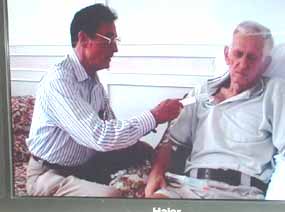 A video recording shows Sartori injecting Ozone into a patient’s body at his illegal clinic.
Learning of this, police applied for an arrest warrant from Chiang Mai Court and apprehended the man. He was charged with fraud and working as a medical practitioner without a license.
The ‘doctor’ had several prior offences to his name and was also charged that on June 5, 2006, he fraudulently offered treatment to an American, for which he was paid 612,000 baht.
Previously, he had been arrested in New York City, in the US on May 18th, 1995 on a charge of posing as a doctor.
Also, on July 17, 1998, he was arrested in Washington, US on a similar charge. He claimed to have a cure for cancer and injected his patients with “Ozone gas”.
Investigations by Chiangmai Mail reporters revealed that the former physician, Hellfried Sartori, received his primary degree in medicine from the University of Graz Medical School in Austria, and went to America where he became involved in ‘alternative’ treatments for many conditions.
One of these was Cesium therapy and he began this program in 1981 at Life Sciences Universal Medical Clinic.
He was also involved with the so-called ‘chelation therapy’ which uses a series of intravenous infusions containing EDTA and various other substances, which is falsely claimed to be effective against cardiovascular disease, autism, and many other diseases and conditions. The use of chelation for such purposes is considered substandard medical practice.
Hellfried Sartori was subsequently struck off the medical register in the US in 1985 and convicted of practicing medicine without a license after injecting ozone into patients intravenously and performing chelation therapy via injection of EDTA to treat various diseases.
It would appear that he continued with this line of treatment, recruiting his “patients” via the Internet.
Chiang Mai Mail,Vol. V No. 29 - Saturday July 15, - July 21, 2006
Sunday, July 16, 2006
What exactly is complementary and alternative medicine?
From aromatherapy to yoga, the use of complementary and alternative medicine is on the increase. It is one of the most confusing areas in health care - how do you choose which line of treatment is best for you?
WHAT EXACTLY IS COMPLEMENTARY AND ALTERNATIVE MEDICINE (CAM)?
The term complementary and alternative medicine (CAM) is used to describe the diverse mixture of health-orientated disciplines and treatments that are not currently regarded as part of conventional medicine. Some of these therapies are provided in conjunction with mainstream medical care (complementary) and others are seen as a substitute to conventional care (alternative) although the line between the two is often blurred. Many complementary and alternative medical systems originated in ancient or oriental systems of medicine (including the Indian practice Ayurveda, Chinese herbalism and yoga) and some are used as part of mainstream practice in the country of their origin to this day.
WHY ARE MORE PEOPLE TURNING TO CAM?
As 'healthcare consumers' we tend to be more demanding these days when it comes to finding a course of treatment that suits us. Complementary and alternative approaches generally share one major principle: it is not the symptom but the person who is treated, and care and time is taken to see the patient as a 'whole' person with physical, mental, spiritual, and emotional needs. Practitioners aim to promote wellness for the whole person, rather than just specific symptoms in a certain area of the body. This approach appeals to many people, especially those who are feeling generally 'under the weather', or those with chronic conditions which are not completely cured by conventional medicine.
WHAT ARE THE PROBLEMS OF CAM?
Some doctors dismiss much of alternative medicine as unproven and potentially dangerous nonsense. This view is an extreme one! However, it certainly helps to be aware of potential problems with CAM. Perhaps the biggest issue is the lack of clinical trials conducted throughout the area. This has a number of implications. When your GP prescribes you a medicine, his choice will be backed up by evidence supporting the effectiveness of the medicine, documenting its side-effects, and advising the amount of drug that is safe. If you take herbs given to you by a Chinese herbalist, none of these safeguards exist. Training and regulation of practitioners throughout CAM is often poor, so this is another problem you need to look out for.
SO HOW CAN I USE CAM THEN?
Lack of clinical evidence does not mean that there isn't lots of anecdotal evidence to support many complementary and alternative practices. Many people swear by the benefits of different therapies, and have even found them to be a life-changing experience. Maybe in the future these personal experiences will be backed up by clinical trials. In the meantime, your best bet is to choose your therapy wisely. Supporting your conventional therapy with a weekly yoga class is unlikely to do you harm, and may well make you feel better. Dropping conventional treatment to consult with a herbalist is a much more questionable strategy, especially if you have a serious medical condition. In fact, going entirely 'alternative' is probably a bad idea altogether - you should always keep your doctor informed about any complementary treatments you are undergoing, and use them as an adjunct to conventional practice.
WHERE CAN I FIND FURTHER INFORMATION ABOUT CAM?
In November 2000, a House of Lords Select Committee (Science and Technology Sixth Report) presented a big study on complementary and alternative medicine in the UK.
It makes interesting reading for anyone interested in CAM and also talks about the evidence for different therapies - you can find the study at: http://www.parliament.the-stationery-office.co.uk
The Institute of Complementary Medicine administers the British Register of Complementary Practitioners (BRCP) - a list of registered practitioners. You can contact them via telephone on 020 7237 5165, or on their website.
This article comes from BUPA, a UK medical insurance company
WHAT EXACTLY IS COMPLEMENTARY AND ALTERNATIVE MEDICINE (CAM)?
The term complementary and alternative medicine (CAM) is used to describe the diverse mixture of health-orientated disciplines and treatments that are not currently regarded as part of conventional medicine. Some of these therapies are provided in conjunction with mainstream medical care (complementary) and others are seen as a substitute to conventional care (alternative) although the line between the two is often blurred. Many complementary and alternative medical systems originated in ancient or oriental systems of medicine (including the Indian practice Ayurveda, Chinese herbalism and yoga) and some are used as part of mainstream practice in the country of their origin to this day.
WHY ARE MORE PEOPLE TURNING TO CAM?
As 'healthcare consumers' we tend to be more demanding these days when it comes to finding a course of treatment that suits us. Complementary and alternative approaches generally share one major principle: it is not the symptom but the person who is treated, and care and time is taken to see the patient as a 'whole' person with physical, mental, spiritual, and emotional needs. Practitioners aim to promote wellness for the whole person, rather than just specific symptoms in a certain area of the body. This approach appeals to many people, especially those who are feeling generally 'under the weather', or those with chronic conditions which are not completely cured by conventional medicine.
WHAT ARE THE PROBLEMS OF CAM?
Some doctors dismiss much of alternative medicine as unproven and potentially dangerous nonsense. This view is an extreme one! However, it certainly helps to be aware of potential problems with CAM. Perhaps the biggest issue is the lack of clinical trials conducted throughout the area. This has a number of implications. When your GP prescribes you a medicine, his choice will be backed up by evidence supporting the effectiveness of the medicine, documenting its side-effects, and advising the amount of drug that is safe. If you take herbs given to you by a Chinese herbalist, none of these safeguards exist. Training and regulation of practitioners throughout CAM is often poor, so this is another problem you need to look out for.
SO HOW CAN I USE CAM THEN?
Lack of clinical evidence does not mean that there isn't lots of anecdotal evidence to support many complementary and alternative practices. Many people swear by the benefits of different therapies, and have even found them to be a life-changing experience. Maybe in the future these personal experiences will be backed up by clinical trials. In the meantime, your best bet is to choose your therapy wisely. Supporting your conventional therapy with a weekly yoga class is unlikely to do you harm, and may well make you feel better. Dropping conventional treatment to consult with a herbalist is a much more questionable strategy, especially if you have a serious medical condition. In fact, going entirely 'alternative' is probably a bad idea altogether - you should always keep your doctor informed about any complementary treatments you are undergoing, and use them as an adjunct to conventional practice.
WHERE CAN I FIND FURTHER INFORMATION ABOUT CAM?
In November 2000, a House of Lords Select Committee (Science and Technology Sixth Report) presented a big study on complementary and alternative medicine in the UK.
It makes interesting reading for anyone interested in CAM and also talks about the evidence for different therapies - you can find the study at: http://www.parliament.the-stationery-office.co.uk
The Institute of Complementary Medicine administers the British Register of Complementary Practitioners (BRCP) - a list of registered practitioners. You can contact them via telephone on 020 7237 5165, or on their website.
This article comes from BUPA, a UK medical insurance company
Monday, July 10, 2006
The Doctors does not recommend oral Chelation as a substitute for intravenous Chelation therapy
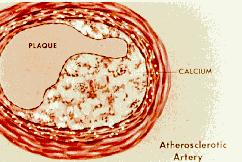 The Doctors does not recommend oral Chelation as a substitute for intravenous Chelation therapy, however.
"There is a significant difference in both the rapidity and degree of benefits achieved with intravenous Chelation over any currently available oral Chelation agents," he says. "And the intravenous approach is clearly the proper choice for patients who have only a few months to get well before facing surgery r worse."
But for patients whose conditions are not as drastic, as well as for those who want to optimally safeguard themselves against free radicals and plaque buildup, our Doctors views oral Chelation as an effective, noninvasive, inexpensive choice. For many patients, memory, sight, hearing, and sense of smell improved, and most reported increased vigor.
Does it hurt?
No, it is painless. The patient reclines comfortably and is give an intravenous solution of EDTA (ethylenediaminetetraacetic acid) with vitamins and minerals.
Is it safe?
Yes of course. The Doctor recommends regular exercise, proper diet, tailored vitamin and nutritional supplements before starting treatments. Our Doctors discourages smoking and moderate alcohol consumption. Tests to be taken before, during, and after Chelation: Pulse, Blood pressure, Blood sugar, Kidney and organ function, Tissue minerals, if indicated.
How long does it take?
For optimal results, twenty to thirty treatments at an average of one to three per week, taking approximately three and a half hours per session.
more information about Chelation.
more discussion: Forum
· Addiction Forum · Ask the Doctors Forum · Ayurveda Forum · Ayurvedic & Thai Herbs Forum · Colon Cleansing Forum · Dental Forum · Diabetes Forum · Diet Forum · General Cleansing Forum · Hepatitis A, B. C Forum · Integrated Medicine Forum · Live Blood Analysis Forum · Ozone-Oxygen-Forum · pH - Alkaline - Acidity Forum · Weight Loss Forum
Thursday, June 29, 2006
Lower Your Blood Pressure – The All-Natural Way.
 Try RESPeRATE – the revolutionary medical device clinically proven to lower high blood pressure. Best of all = no side effects.
Finally, a personal therapeutic device that's clinically proven to lower blood pressure. RESPeRATE's patented technology gently relaxes constricted blood vessels to reduce your high blood pressure.
And all you have to do is breathe.
Just 15 minutes of RESPeRATE's paced breathing a few times a week, and you'll see a significant, lasting reduction in your blood pressure within 4-6 weeks.
more discussion: Forum
· Addiction Forum · Ask the Doctors Forum · Ayurveda Forum · Ayurvedic & Thai Herbs Forum · Colon Cleansing Forum · Dental Forum · Diabetes Forum · Diet Forum · General Cleansing Forum · Hepatitis A, B. C Forum · Integrated Medicine Forum · Live Blood Analysis Forum · Ozone-Oxygen-Forum · pH - Alkaline - Acidity Forum · Weight Loss Forum
Wednesday, June 21, 2006
Alternative Medical Systems
Provided by: 
Alternative medical systems involve complete systems of theory and practice that have evolved independent of and often prior to the conventional biomedical approach. Many are traditional systems of medicine that are practiced by individual cultures throughout the world, including a number of venerable Asian approaches.
Traditional oriental medicine emphasizes the proper balance or disturbances of qi (pronounced chi), or vital energy, in health and disease, respectively. Traditional oriental medicine consists of a group of techniques and methods, including acupuncture, herbal medicine, oriental massage and qi gong (a form of energy therapy described more fully below). Acupuncture involves stimulating specific anatomic points in the body for therapeutic purposes, usually by puncturing the skin with a needle.
Ayurveda (Eye yer vay duh) is India's traditional system of medicine. Ayurvedic medicine (meaning "science of life") is a comprehensive system of medicine that places equal emphasis on body, mind and spirit, and strives to restore the innate harmony of the individual. Some of the primary Ayurvedic treatments include diet, exercise, meditation, herbs, massage, exposure to sunlight and controlled breathing.
Other traditional medical systems have been developed by Native American, Aboriginal, African, Middle-Eastern, Tibetan, Central and South American cultures.
Homeopathy and naturopathy are also examples of complete alternative medical systems. Homeopathy is an unconventional Western system that is based on the principle that "like cures like," i.e., that the same substance that in large doses produces the symptoms of an illness, in very minute doses cures it. Homeopathic physicians believe that the more dilute the remedy, the greater its potency. Therefore, homeopaths use small doses of specially prepared plant extracts and minerals to stimulate the body's defense mechanisms and healing processes in order to treat illness.
Naturopathy views disease as a manifestation of alterations in the processes by which the body naturally heals itself and emphasizes health restoration rather than disease treatment. Naturopathic physicians employ an array of healing practices, including diet and clinical nutrition, homeopathy, acupuncture, herbal medicine, hydrotherapy (the use of water in a range of temperatures and methods of applications), spinal and soft-tissue manipulation, physical therapies involving electric currents, ultrasound and light therapy, therapeutic counseling and pharmacology.
more:
Integrated medicine

Alternative medical systems involve complete systems of theory and practice that have evolved independent of and often prior to the conventional biomedical approach. Many are traditional systems of medicine that are practiced by individual cultures throughout the world, including a number of venerable Asian approaches.
Traditional oriental medicine emphasizes the proper balance or disturbances of qi (pronounced chi), or vital energy, in health and disease, respectively. Traditional oriental medicine consists of a group of techniques and methods, including acupuncture, herbal medicine, oriental massage and qi gong (a form of energy therapy described more fully below). Acupuncture involves stimulating specific anatomic points in the body for therapeutic purposes, usually by puncturing the skin with a needle.
Ayurveda (Eye yer vay duh) is India's traditional system of medicine. Ayurvedic medicine (meaning "science of life") is a comprehensive system of medicine that places equal emphasis on body, mind and spirit, and strives to restore the innate harmony of the individual. Some of the primary Ayurvedic treatments include diet, exercise, meditation, herbs, massage, exposure to sunlight and controlled breathing.
Other traditional medical systems have been developed by Native American, Aboriginal, African, Middle-Eastern, Tibetan, Central and South American cultures.
Homeopathy and naturopathy are also examples of complete alternative medical systems. Homeopathy is an unconventional Western system that is based on the principle that "like cures like," i.e., that the same substance that in large doses produces the symptoms of an illness, in very minute doses cures it. Homeopathic physicians believe that the more dilute the remedy, the greater its potency. Therefore, homeopaths use small doses of specially prepared plant extracts and minerals to stimulate the body's defense mechanisms and healing processes in order to treat illness.
Naturopathy views disease as a manifestation of alterations in the processes by which the body naturally heals itself and emphasizes health restoration rather than disease treatment. Naturopathic physicians employ an array of healing practices, including diet and clinical nutrition, homeopathy, acupuncture, herbal medicine, hydrotherapy (the use of water in a range of temperatures and methods of applications), spinal and soft-tissue manipulation, physical therapies involving electric currents, ultrasound and light therapy, therapeutic counseling and pharmacology.
more:
Integrated medicine
Monday, May 29, 2006
Herbs for Hypertension?
Herbs for Hypertension?
Provided by: DrWeil.com
Q: I just read about a new herbal medicine for blood pressure called Mukta Vati. What do you think about it? I am currently having trouble taking a prescription drug for blood pressure. It is really helping my (blood) pressure, but it is causing insomnia. I am having dreams every night, and even if I do get a nap it is not a solid sleep. -- Nick G.
A: Mukta Vati is an Ayurvedic herb used to treat high blood pressure. Although I've seen testimonials from people who say it really has helped lower their blood pressure, I haven't seen any scientific studies confirming its effects.
If your blood pressure is high enough to warrant medication, I would suggest discussing the drug-related problems you've been having with your physician. He or she may recommend another medication or adjust the dosage of the one you're taking in an effort to eliminate the side effects you've experienced. At the same time, consider making lifestyle changes that can help control your blood pressure. Here are some suggestions:
Limit your caffeine intake (caffeine can contribute to high blood pressure).
Limit alcohol intake (Blood pressure increases as your body metabolizes alcohol.)
Avoid processed foods and other sources of salt. Your salt intake should be no more than one teaspoon (2,400 mg) per day.
Watch your weight. (Losing even a few pounds can improve blood pressure.)
Relax. (Meditation, yoga, breathing exercises and biofeedback all can help lower blood pressure.)
Don't smoke.
Exercise. (As little as 30 minutes per day of walking can lower blood pressure.)
Make sure that no medication you're taking is contributing to high blood pressure. (Steroids, birth control pills, decongestants, NSAIDS and diet pills can raise blood pressure. So can over-the-counter medications containing licorice root, guaraná, kola nut, yerba maté, ginseng and yohimbe.)
Take calcium and magnesium. (Low intake of both are associated with high blood pressure; women need between 1,000 and 1,500 mg of calcium per day; men no more than 1,200 mg daily from all sources. If you get your calcium from supplements, take half as much magnesium as your calcium dosage.)
Take vitamin C, which has been shown to lower blood pressure in people with mild to moderate hypertension.
In addition, make sure that your daily diet includes eight to 10 servings of fruits and vegetables, two to three servings of low or non-fat dairy foods, and garlic (it can help lower blood pressure). Include four to five servings of nuts, seeds and dry beans per week and plenty of fish such as wild Alaskan salmon and sardines for the heart-protective omega-3 fatty acids they provide.
Andrew Weil, M.D. –Author of:
Eight Weeks to Optimum Health
Spontaneous Healing
The Natural Mind
The Marriage of the Sun and Moon
Health and Healing
Natural Health, Natural Medicine
From Chocolate to Morphine (with Winifred Rosen)
Provided by: DrWeil.com
Q: I just read about a new herbal medicine for blood pressure called Mukta Vati. What do you think about it? I am currently having trouble taking a prescription drug for blood pressure. It is really helping my (blood) pressure, but it is causing insomnia. I am having dreams every night, and even if I do get a nap it is not a solid sleep. -- Nick G.
A: Mukta Vati is an Ayurvedic herb used to treat high blood pressure. Although I've seen testimonials from people who say it really has helped lower their blood pressure, I haven't seen any scientific studies confirming its effects.
If your blood pressure is high enough to warrant medication, I would suggest discussing the drug-related problems you've been having with your physician. He or she may recommend another medication or adjust the dosage of the one you're taking in an effort to eliminate the side effects you've experienced. At the same time, consider making lifestyle changes that can help control your blood pressure. Here are some suggestions:
Limit your caffeine intake (caffeine can contribute to high blood pressure).
Limit alcohol intake (Blood pressure increases as your body metabolizes alcohol.)
Avoid processed foods and other sources of salt. Your salt intake should be no more than one teaspoon (2,400 mg) per day.
Watch your weight. (Losing even a few pounds can improve blood pressure.)
Relax. (Meditation, yoga, breathing exercises and biofeedback all can help lower blood pressure.)
Don't smoke.
Exercise. (As little as 30 minutes per day of walking can lower blood pressure.)
Make sure that no medication you're taking is contributing to high blood pressure. (Steroids, birth control pills, decongestants, NSAIDS and diet pills can raise blood pressure. So can over-the-counter medications containing licorice root, guaraná, kola nut, yerba maté, ginseng and yohimbe.)
Take calcium and magnesium. (Low intake of both are associated with high blood pressure; women need between 1,000 and 1,500 mg of calcium per day; men no more than 1,200 mg daily from all sources. If you get your calcium from supplements, take half as much magnesium as your calcium dosage.)
Take vitamin C, which has been shown to lower blood pressure in people with mild to moderate hypertension.
In addition, make sure that your daily diet includes eight to 10 servings of fruits and vegetables, two to three servings of low or non-fat dairy foods, and garlic (it can help lower blood pressure). Include four to five servings of nuts, seeds and dry beans per week and plenty of fish such as wild Alaskan salmon and sardines for the heart-protective omega-3 fatty acids they provide.
Andrew Weil, M.D. –Author of:
Eight Weeks to Optimum Health
Spontaneous Healing
The Natural Mind
The Marriage of the Sun and Moon
Health and Healing
Natural Health, Natural Medicine
From Chocolate to Morphine (with Winifred Rosen)
Wednesday, May 24, 2006
Is Mineral Water Bad for You?
 Is Mineral Water Bad for You?
 Provided by: DrWeil.com
Q: I just love drinking mineral water. I can't seem to get enough of it. I usually drink San Pellegrino water. Is there a health risk in drinking mineral water? If not, is it healthy for you? -- Adam
A: Mineral water is an excellent drink. There's even evidence to suggest that mineral water is beneficial to health, although the body probably doesn't absorb many minerals from it. My only caution is that some mineral waters are high in sodium and should be avoided by people who have high blood pressure.
If you enjoy drinking mineral water, there's no reason to stop. The standard recommendation is to drink at least eight 8-ounce glasses of water or water-based beverages a day, more when you exercise. Try to drink as much as you can and more than you think you need. Always drink more if you are perspiring a lot, which increases water loss.
It is possible to drink too much water. A condition called water intoxication or hyponatremia sometimes affects marathon runners or cyclists who consume large amounts of water over the course of a race. This increases blood plasma (the liquid part of blood) and dilutes the salt content of the blood at the same time that people are losing salt by sweating. The reduced availability of salt to body tissues can interfere with brain, heart, and muscle function.
If you're drinking lots of water because of excessive thirst, see your physician. Excessive thirst can be a sign of diabetes.
Andrew Weil, M.D. –Author of:
Eight Weeks to Optimum Health
Spontaneous Healing
The Natural Mind
The Marriage of the Sun and Moon
Health and Healing
Natural Health, Natural Medicine
From Chocolate to Morphine (with Winifred Rosen)
more:
Ayurvedic Medicine
Ozone Oxygen Therapy
Disease & Conditions
Colon Hydrotherapy
Diet Programs
Parasites Programs
Detoxification Program
Liver Cleansing
Liver Flush
Kidney Cleansing
Tuesday, May 23, 2006
Does OJ Really Deliver Calcium?
 Provided by: DrWeil.com
Q: I just heard that the calcium in some fortified orange juice may not be absorbed by the body. I've been counting on orange juice to help me get the daily calcium I need. What should I do? -- Dale
A: You may have heard about a study showing that some calcium-fortified orange juice contains calcium that isn't readily absorbed, meaning that you're not getting as much as you think you are per serving. The study was done at Creighton University in Omaha by a team led by Dr. Robert P. Heaney, a nationally known authority on calcium. The researchers recruited 25 healthy young women and asked them to drink two different brands of orange juice on separate days with their breakfast. Later, the researchers took blood samples to determine how well the calcium in the juice was absorbed.
Each brand of juice contained 500 mg of calcium per serving, but one brand provided calcium in the form of calcium citrate and malate and the other a combination of tricalcium phosphate and calcium lactate. The researchers found that the women absorbed 48 percent more of the calcium citrate than they did of the other type of calcium. The study was published in the May 2005 issue of the Journal of the American Dietetic Association and was partially funded by the manufacturer of the orange juice that contained the better absorbed form.
If you drink calcium-fortified orange juice frequently, look for brands containing calcium citrate and malate. Unfortunately, consumers have no way of knowing whether their bodies really are absorbing the nutrients added to any food via fortification. Commenting on his study, Dr. Heaney noted that only pressure from consumers will force manufacturers to test their products to make sure that added nutrients are bioavailable - absorbed by the body as intended.
Calcium from natural products also varies somewhat in its absorbability, as do some supplements. But you can't go wrong by eating a lot of cooked greens (collards have the most calcium), molasses, sesame seeds, broccoli, and tofu (read package labels to make sure calcium was used in its preparation), as well as calcium-fortified soy milk (check the type of calcium used here, too), and, of course, low-fat or no-fat dairy products.
Andrew Weil, M.D. –Author of:
Eight Weeks to Optimum Health
Spontaneous Healing
The Natural Mind
The Marriage of the Sun and Moon
Health and Healing
Natural Health, Natural Medicine
From Chocolate to Morphine (with Winifred Rosen)
more:
Ayurvedic Medicine
Ozone Oxygen Therapy
Disease & Conditions
Colon Hydrotherapy
Diet Programs
Parasites Programs
Detoxification Program
Liver Cleansing
Liver Flush
Kidney Cleansing
Subscribe to:
Posts (Atom)
Dr. Group's Secret to Health Kit$39.94 Dr. Group's Secret to Health Kit offers simple at-home solutions for cleansing internally and externally thereby reducing toxins, restoring the body's natural healing process, and helping you achieve true health and happiness. |