(HealthDay News) -- A feisty breed of terrier could stop scientists from barking up the wrong tree as they research a deadly lung disease in humans.
The illness, called idiopathic pulmonary fibrosis (IPF), affects 128,000 Americans, is typically fatal within three years of diagnosis, and kills more than 40,000 people in the United States annually -- a death toll equivalent to that of breast cancer.
A fatal condition that looks remarkably like IPF also strikes the diminutive West Highland White terrier ("Westie"), however. And recently, medical scientists from the human and veterinarian worlds met for the first time to share information and pool resources against a mysterious killer.
"People may be a little startled at first to learn about this idea -- 'You're kidding me, you actually think there's promise in studying this dog to help my Dad with this disease?' And the answer is -- 'Yes'," said Mark Shreve, chief operating officer of the patient advocacy group Coalition for Pulmonary Fibrosis, based in San Jose, Calif.
Because the Westie is so tightly bred, and because the illness progresses faster in dogs than humans, it is conceivable that dog-based research might yield valuable clues to the genetics or environmental factors that trigger pulmonary fibrosis in both species, experts explained.
"And if it transpires that it is the same disease, then obviously the options are limitless as to how we can look at information from dogs and use it to understand the disease in humans and vice versa," said Dr. Brendan Corcoran, director of the Hospital for Small Animals at the University of Edinburgh, Scotland, and a pioneer in researching pulmonary fibrosis in Westies.
According to Shreve, most people find it hard to believe that a disease like IPF even exists amid the wonders of modern medicine.
"We are dealing here with one of the few diseases left on the planet for which there are no proven causes and no treatments," he said.
Idiopathic pulmonary fibrosis occurs spontaneously, although certain factors -- such as smoking or exposure to airborne toxins -- do raise risks for the illness. "IPF is a progressive scarring process in the lungs that gradually robs a person of the ability to breathe," Shreve explained.
Some sort of signaling seems to go awry at the cellular level, he said, converting normal, expansive lung tissue into stiff, fibrotic scar tissue.
"Once it starts in patients with IPF, your body just never sends a signal to stop that scar tissue from being produced," Shreve said. "This scar tissue is obviously not lung tissue that is able to process oxygen."
There have so far been very few promising leads in discovering the root causes of IPF, said Dr. Jesse Roman, one of the country's leading researchers in the disease and a professor of medicine at Emory University in Atlanta.
"Studies do suggest very specific [cellular] pathways, and there's a number of molecules that everybody is tuned into," he said. "But how you block them and how they relate to what happens in humans, that's less clear."
So, scientists are turning to creative new ways of looking at IPF.
Cross-talk between scientists worldwide led to the first-ever summit on the disease that included both veterinary and human medical researchers. The meeting was held in October on the campus of Purdue University in West Lafayette, Ind., and was attended by Corcoran, Roman and others. It was sponsored by the Westie Foundation of America and the American Kennel Club (AKC) Canine Health Foundation.
Westies, which grow to just under a foot in length, are described by the AKC as "courageous and self-reliant, but friendly."
"They're a very popular pet because of their size and their nature," Corcoran said.
However, pulmonary fibrosis does pop up in the breed with regularity, first revealing itself as excessive panting and shortness of breath. The illness also tends to develop in the terriers' late middle-age (about eight or nine years), mimicking its typical onset in humans at about age 50 to 60.
Westies inevitably succumb to the lung fibrosis about a year and a half after their diagnosis, Corcoran said.
Still, "there's still the contentious issue of whether this is the same disease as occurs in humans," he said. The exact prevalence of the disease among Westies is also unclear, he added. That means the first aim of Westies-centered research will be epidemiological -- studying disease prevalence and gathering a core of dogs and their owners that researchers might follow going forward.
Getting postmortem samples of canine lung tissue will also be crucial to a better understanding of the causes of the disease, Corcoran said. But that has its own challenges, he added.
"Getting owners to volunteer their dogs for necropsy is always problematic," he said. In fact, it's often "harder in many instances to get lung pathology samples from dogs than it is from humans," Corcoran said.
"However, one of our plans is to try and build up a group of concerned owners who will volunteer to donate their dog when that day arrives. We've been having some discussions on that already with our colleagues in America," Corcoran said. "Hopefully, the more publicity that we get with this condition, the more we may get owners coming forward and volunteering their dogs for research."
Corcoran and the other experts said that a cure for IPF is definitely not around the corner -- the disease has been as tenacious in keeping its secrets as, well, a terrier.
But Westies may be just the foe in the fight against IPF requires. Corcoran pointed out that the dogs' tight breeding means genetic research could yield important clues. And their shorter lifespan -- a seventh of that of humans -- means scientists can watch the disease in "fast-forward," which might also speed research.
Westies are also free of certain confounding factors, such as smoking, that often muddle human research. "The dogs might turn out to have a very pure form of the disease that allows you to investigate the disease itself and not worry about other factors," Corcoran noted.
Given all of this, "why wouldn't you look at a Westie and research how the disease progresses?" said patient-advocate Shreve.
"We think it's a very creative approach to trying to help out humans," he said, "and our patients don't really have the patience to hang around waiting for a miracle.
More information
To learn much more about IPF, visit the Coalition for Pulmonary Fibrosis.
more discussion: Forum
· Addiction Forum · Ask the Doctors Forum · Ayurveda Forum · Ayurvedic & Thai Herbs Forum · Colon Cleansing Forum · Dental Forum · Diabetes Forum · Diet Forum · General Cleansing Forum · Hepatitis A, B. C Forum · Integrated Medicine Forum · Live Blood Analysis Forum · Ozone-Oxygen-Forum · pH - Alkaline - Acidity Forum · Weight Loss Forum
Showing posts with label Lung-Cancer. Show all posts
Showing posts with label Lung-Cancer. Show all posts
Friday, December 28, 2007


Tuesday, December 18, 2007
Cancer Killed Almost 8 Million Worldwide in 2007
(HealthDay News) -- Cancer continues to cut a deadly swath across the globe, with the American Cancer Society reporting 12 million new cases of malignancy diagnosed worldwide in 2007, with 7.6 million people dying from the disease.
The report, Global Cancer Facts & Figures, finds that 5.4 million of those cancers and 2.9 million deaths are in more affluent, developed nations, while 6.7 million new cancer cases and 4.7 million deaths hit people in developing countries.
"The point of the report is to promote cancer control worldwide, and increase awareness worldwide," said report co-author Dr. Ahmedin Jemal, director of the society's Cancer Occurrence Office.
The number of cancers and cancer deaths around the world is on the rise, Jemal said, mostly due to an aging population. "There is increasing life expectancy, and cancer occurs more frequently in older age groups," he noted.
Lifestyle may be another reason for the rise in malignancies in developing countries, Jemal said, as people adopt Western behaviors such as smoking, high-fat diets and less physical activity.
The best way to stem the increasing number of cancer cases and deaths is prevention, especially in poorer countries, the expert said. In many developing nations, the health-care infrastructure simply isn't there to offer cancer screening and treatment for most people, Jemal added.
In developed countries, the most common cancers among men are prostate, lung and colorectal cancer. Among women, the most common cancers are breast, colorectal and lung cancer, according to the report.
However, in developing countries the three most common cancers among men are lung, stomach and liver, and among women, breast, cervix uteri and stomach.
Worldwide, some 15 percent of all cancers are thought to be related to infections, including hepatitis (liver cancer) and human papilloma virus (cervical cancer). But the incidence of infection-related cancers remains three times higher in developing countries compared with developed countries (26 percent vs. 8 percent), according to the report.
In addition, cancer survival rates in many developing countries are far below those in developed countries. This is mostly due to the lack of early detection and treatment services. For example, in North America five-year childhood cancer survival rates are about 75 percent compared with three-year survival rates of 48 percent to 62 percent in Central America, the report notes. The report estimates that 60 percent of the world's children who develop cancer have little or no access to treatment.
The report also includes a section on the toll tobacco use takes around the world. In 2000, some 5 million people worldwide died from tobacco use. Of these, about 30 percent (1.42 million) died from cancer -- 850,000 from lung cancer alone.
Jemal believes smoking is a key culprit.
"Smoking prevalence is decreasing in developed countries. So, as tobacco companies are losing market in developed countries they are trying to expand their market in developing countries," he said.
In China alone, more than 350 million people smoke. "That's more than the entire population of the United States," Jemal said. "If these current patterns continue, there will be 2 billion smokers worldwide by the year 2030, half of whom will die of smoking-related diseases if they do not quit," he added.
In the 20th century, tobacco use caused about 100 million deaths around the world. In this century, that figure is expected to rise to over 1 billion people. Most of these will occur in developing countries.
One expert agreed that many cancer deaths can be avoided through lifestyle changes.
"What is most provocative here is not the total global burden of suffering and death cancer causes, dramatic though that may be, but the variations in cancer occurrence around the world, and the insights provided about how much of the cancer burden need not occur at all," said Dr. David Katz, director of the Prevention Research Center at Yale University School of Medicine.
In developing countries, cancer of the uterine cervix is a leading cause of death in women, Katz noted.
"Yet this infection-related cancer is now preventable by vaccine, and long treatable when detected early using the Pap smear. As a result, death from cervical cancer in developed countries is dramatically lower. Its toll in the developing world is testimony to missed opportunities to apply our resources effectively, and equitably," he said.
Cancer of the liver, often related to hepatitis infection, is a leading cause of death in developing countries, but not so in developed countries. "Again, an infection preventable with vaccine is causing death because of inequities in the distribution and use of existing resources," Katz said.
Prostate and colon cancers are more common in wealthier countries, where they are likely related to poor diet and obesity, Katz said. "Unnecessary suffering and death are occurring in affluent countries due to dietary excesses," he said.
Katz also noted that tobacco-related cancer is largely preventable. "The toll of tobacco-related disease, including lung cancer, is an appalling example of a global willingness to tolerate preventable suffering and death for the sake of profit," he said.
These data show both developed and developing countries how to move toward the lower rates of specific cancers, Katz said.
"It will be a tragic failure for public health if instead of applying these lessons developed countries continue to export tobacco and dietary transgressions so that the developing world adds to its current cancer burden ours as well," he said.
More information
For more information on cancer, visit the American Cancer Society.
The report, Global Cancer Facts & Figures, finds that 5.4 million of those cancers and 2.9 million deaths are in more affluent, developed nations, while 6.7 million new cancer cases and 4.7 million deaths hit people in developing countries.
"The point of the report is to promote cancer control worldwide, and increase awareness worldwide," said report co-author Dr. Ahmedin Jemal, director of the society's Cancer Occurrence Office.
The number of cancers and cancer deaths around the world is on the rise, Jemal said, mostly due to an aging population. "There is increasing life expectancy, and cancer occurs more frequently in older age groups," he noted.
Lifestyle may be another reason for the rise in malignancies in developing countries, Jemal said, as people adopt Western behaviors such as smoking, high-fat diets and less physical activity.
The best way to stem the increasing number of cancer cases and deaths is prevention, especially in poorer countries, the expert said. In many developing nations, the health-care infrastructure simply isn't there to offer cancer screening and treatment for most people, Jemal added.
In developed countries, the most common cancers among men are prostate, lung and colorectal cancer. Among women, the most common cancers are breast, colorectal and lung cancer, according to the report.
However, in developing countries the three most common cancers among men are lung, stomach and liver, and among women, breast, cervix uteri and stomach.
Worldwide, some 15 percent of all cancers are thought to be related to infections, including hepatitis (liver cancer) and human papilloma virus (cervical cancer). But the incidence of infection-related cancers remains three times higher in developing countries compared with developed countries (26 percent vs. 8 percent), according to the report.
In addition, cancer survival rates in many developing countries are far below those in developed countries. This is mostly due to the lack of early detection and treatment services. For example, in North America five-year childhood cancer survival rates are about 75 percent compared with three-year survival rates of 48 percent to 62 percent in Central America, the report notes. The report estimates that 60 percent of the world's children who develop cancer have little or no access to treatment.
The report also includes a section on the toll tobacco use takes around the world. In 2000, some 5 million people worldwide died from tobacco use. Of these, about 30 percent (1.42 million) died from cancer -- 850,000 from lung cancer alone.
Jemal believes smoking is a key culprit.
"Smoking prevalence is decreasing in developed countries. So, as tobacco companies are losing market in developed countries they are trying to expand their market in developing countries," he said.
In China alone, more than 350 million people smoke. "That's more than the entire population of the United States," Jemal said. "If these current patterns continue, there will be 2 billion smokers worldwide by the year 2030, half of whom will die of smoking-related diseases if they do not quit," he added.
In the 20th century, tobacco use caused about 100 million deaths around the world. In this century, that figure is expected to rise to over 1 billion people. Most of these will occur in developing countries.
One expert agreed that many cancer deaths can be avoided through lifestyle changes.
"What is most provocative here is not the total global burden of suffering and death cancer causes, dramatic though that may be, but the variations in cancer occurrence around the world, and the insights provided about how much of the cancer burden need not occur at all," said Dr. David Katz, director of the Prevention Research Center at Yale University School of Medicine.
In developing countries, cancer of the uterine cervix is a leading cause of death in women, Katz noted.
"Yet this infection-related cancer is now preventable by vaccine, and long treatable when detected early using the Pap smear. As a result, death from cervical cancer in developed countries is dramatically lower. Its toll in the developing world is testimony to missed opportunities to apply our resources effectively, and equitably," he said.
Cancer of the liver, often related to hepatitis infection, is a leading cause of death in developing countries, but not so in developed countries. "Again, an infection preventable with vaccine is causing death because of inequities in the distribution and use of existing resources," Katz said.
Prostate and colon cancers are more common in wealthier countries, where they are likely related to poor diet and obesity, Katz said. "Unnecessary suffering and death are occurring in affluent countries due to dietary excesses," he said.
Katz also noted that tobacco-related cancer is largely preventable. "The toll of tobacco-related disease, including lung cancer, is an appalling example of a global willingness to tolerate preventable suffering and death for the sake of profit," he said.
These data show both developed and developing countries how to move toward the lower rates of specific cancers, Katz said.
"It will be a tragic failure for public health if instead of applying these lessons developed countries continue to export tobacco and dietary transgressions so that the developing world adds to its current cancer burden ours as well," he said.
More information
For more information on cancer, visit the American Cancer Society.
Oxy-Powder® Complete Cleansing System$147.75  Complete Cleansing System with Livatrex™, Oxy-Powder®, Latero-Flora™, and two bottles of ParaTrex®. |
Sunday, December 02, 2007
Cancer Patients Gain From Reporting Symptoms Online
(HealthDay News) -- Having cancer patients report to doctors on their symptoms and side effects online may improve their care, a new study finds.
Even the sickest cancer patients are willing and capable of reporting their symptoms online, says a team from Memorial Sloan-Kettering Cancer Center in New York City.
"Cancer care has become increasingly complex, causing office visits to become more compressed. This makes it challenging for the clinician to comprehensively assess each patient's symptoms in that brief window of time," study author Dr. Ethan Basch, a medical oncologist, said in a prepared statement.
"Because cancer therapies can be highly toxic, early detection of symptoms and timely treatment is vital. What is exciting to us about online self-reporting is that patients can alert clinicians to crucial symptoms in real time," Basch said.
The study included 107 lung cancer patients receiving outpatient chemotherapy who had access to a secure Internet patient reporting system developed by Basch and his colleagues. The patients were able to access the Symptom Tracking and Reporting (STAR) site using computers in waiting room kiosks and at home to report cancer symptoms and chemotherapy-related side effects.
The patients were followed for up to 16 months and 40 visits. All of the patients used the waiting room kiosks at some or all of their office visits, and an average of 78 percent logged onto the system at any given office visit. Patients were more likely to use STAR if they had prior computer experience.
The study found that 98 percent of patients found STAR easy to use, 90 percent said it was useful, and 77 percent believed it improved the quality of their discussions with clinicians.
The study appears in the Dec. 1 issue of the Journal of Clinical Oncology.
More information
The U.S. National Cancer Institute has more about coping with cancer.
more discussion: Forum
· Addiction Forum · Ask the Doctors Forum · Ayurveda Forum · Ayurvedic & Thai Herbs Forum · Colon Cleansing Forum · Dental Forum · Diabetes Forum · Diet Forum · General Cleansing Forum · Hepatitis A, B. C Forum · Integrated Medicine Forum · Live Blood Analysis Forum · Ozone-Oxygen-Forum · pH - Alkaline - Acidity Forum · Weight Loss Forum
Even the sickest cancer patients are willing and capable of reporting their symptoms online, says a team from Memorial Sloan-Kettering Cancer Center in New York City.
"Cancer care has become increasingly complex, causing office visits to become more compressed. This makes it challenging for the clinician to comprehensively assess each patient's symptoms in that brief window of time," study author Dr. Ethan Basch, a medical oncologist, said in a prepared statement.
"Because cancer therapies can be highly toxic, early detection of symptoms and timely treatment is vital. What is exciting to us about online self-reporting is that patients can alert clinicians to crucial symptoms in real time," Basch said.
The study included 107 lung cancer patients receiving outpatient chemotherapy who had access to a secure Internet patient reporting system developed by Basch and his colleagues. The patients were able to access the Symptom Tracking and Reporting (STAR) site using computers in waiting room kiosks and at home to report cancer symptoms and chemotherapy-related side effects.
The patients were followed for up to 16 months and 40 visits. All of the patients used the waiting room kiosks at some or all of their office visits, and an average of 78 percent logged onto the system at any given office visit. Patients were more likely to use STAR if they had prior computer experience.
The study found that 98 percent of patients found STAR easy to use, 90 percent said it was useful, and 77 percent believed it improved the quality of their discussions with clinicians.
The study appears in the Dec. 1 issue of the Journal of Clinical Oncology.
More information
The U.S. National Cancer Institute has more about coping with cancer.
more discussion: Forum
· Addiction Forum · Ask the Doctors Forum · Ayurveda Forum · Ayurvedic & Thai Herbs Forum · Colon Cleansing Forum · Dental Forum · Diabetes Forum · Diet Forum · General Cleansing Forum · Hepatitis A, B. C Forum · Integrated Medicine Forum · Live Blood Analysis Forum · Ozone-Oxygen-Forum · pH - Alkaline - Acidity Forum · Weight Loss Forum
Oxy-Powder® Complete Cleansing System$147.75 Complete Cleansing System with Livatrex™, Oxy-Powder®, Latero-Flora™, and two bottles of ParaTrex®. |
Tuesday, September 11, 2007
Experts Offer Tips on Lung Cancer Prevention
(HealthDay News) -- People, especially smokers, should not rely on vitamin and mineral supplements to prevent lung cancer, say members of the American College of Chest Physicians in their second annual guide to lung cancer prevention, care and treatment.
The new evidence-based guidelines also include a strong statement opposing the use of low-dose CT scans for the general screening of lung cancer.
Lung cancer is the leading cause of cancer death in the United States. More people die from lung cancer than from colon, breast, prostate and pancreatic cancer combined.
"Each year, great strides are made in the diagnosis and treatment of lung cancer, allowing patients with the disease to live longer and increase the quality of their lives. However, the real culprit behind lung cancer is tobacco," Dr. Mark J. Rosen, president of the American College of Chest Physicians (ACCP), said in a prepared statement. "Avoiding tobacco is the key to preventing most forms of lung cancer. Until we eliminate tobacco use completely, we will continue to deal with its devastating health consequences."
Published as a supplement to the September issue of the college's journal Chest, the guidelines note there is little evidence to show lung cancerscreening changes the outcome for patients, including those considered to be at high risk.
"Even in high-risk populations, currently available research data do not show that lung cancer screening alters mortality outcomes," Dr. W. Michael Alberts, chairman of the ACCP lung cancer guidelines, said in a prepared statement. "We hope that, one day, we can find a useful and accurate tool for general lung cancer screening but, at this time, the evidence does not support the use of LDCT screening."
This is the second edition of Diagnosis and Management of Lung Cancer: ACCP Evidence-Based Clinical Practice Guidelines. The guide contains 260 recommendations, including a review of complementary and integrative therapy for the prevention and treatment of lung cancer.
Due to the lack of supporting evidence, the guidelines recommend against the use of LDCT, chest X-rays or single or serial sputum cytologic evaluation for lung cancer screening in the general population, including smokers or others at high risk. The exceptions are for patients in well-designed clinical trials.
"Population screening for lung cancer is not recommended and may, ultimately, put the patient at risk for further complications," Dr. Gene L. Colice, vice chairman of the ACCP lung cancer guidelines, said in a prepared statement. "Nodules are commonly found during screening; however, to determine whether they are cancerous requires additional testing, which is fairly invasive and extensive. This may cause the patient needless risk, both physically and psychologically."
In terms of prevention, the guidelines recommend against the use of several common supplements and medications in at-risk patients or those with a history of lung cancer.
Beta carotene tops the list of supplements that the ACCP recommends against. According to the data, there is a actually a higher incidence of lung cancer in people who use these supplements.
Other supplement recommendations:
Vitamin A, including isotretinoin, has not been shown to decrease the number of second tumors and actually increases the risk of early death for current smokers.
Vitamin E is not recommended for lung cancer prevention, as studies show that there is no difference in the occurrence of lung cancer between people taking vitamin E and those who are not.
Aspirin has been shown in some studies to play a protective role, but the guidelines do not recommend aspirin for preventing lung cancer. Studies show aspirin does not decrease the risk of death or lung cancer incidence.
This is also the first edition of the guidelines to include recommendations on techniques that can help reduce the anxiety, mood disturbances and chronic pain associated with cancer.
Massage therapy is recommended as a way to reduce anxiety and pain.
Acupuncture is recommended for patients experiencing fatigue, dyspnea and chemo-induced neuropathy. Acupuncture is also recommended for people whose nausea, vomiting or pain is poorly controlled.
Electrostimulation wristbands are not recommended for managing chemo-induced nausea or vomiting. Studies show they do little to delay nausea or vomiting.
A multidisciplinary group of 100 pulmonologists, medical oncologists, radiation oncologists, thoracic surgeons and other health professionals reviewed the 260 recommendations.
More information
To learn about lung cancer, visit the U.S. Centers for Disease Control and Prevention.
The new evidence-based guidelines also include a strong statement opposing the use of low-dose CT scans for the general screening of lung cancer.
Lung cancer is the leading cause of cancer death in the United States. More people die from lung cancer than from colon, breast, prostate and pancreatic cancer combined.
"Each year, great strides are made in the diagnosis and treatment of lung cancer, allowing patients with the disease to live longer and increase the quality of their lives. However, the real culprit behind lung cancer is tobacco," Dr. Mark J. Rosen, president of the American College of Chest Physicians (ACCP), said in a prepared statement. "Avoiding tobacco is the key to preventing most forms of lung cancer. Until we eliminate tobacco use completely, we will continue to deal with its devastating health consequences."
Published as a supplement to the September issue of the college's journal Chest, the guidelines note there is little evidence to show lung cancerscreening changes the outcome for patients, including those considered to be at high risk.
"Even in high-risk populations, currently available research data do not show that lung cancer screening alters mortality outcomes," Dr. W. Michael Alberts, chairman of the ACCP lung cancer guidelines, said in a prepared statement. "We hope that, one day, we can find a useful and accurate tool for general lung cancer screening but, at this time, the evidence does not support the use of LDCT screening."
This is the second edition of Diagnosis and Management of Lung Cancer: ACCP Evidence-Based Clinical Practice Guidelines. The guide contains 260 recommendations, including a review of complementary and integrative therapy for the prevention and treatment of lung cancer.
Due to the lack of supporting evidence, the guidelines recommend against the use of LDCT, chest X-rays or single or serial sputum cytologic evaluation for lung cancer screening in the general population, including smokers or others at high risk. The exceptions are for patients in well-designed clinical trials.
"Population screening for lung cancer is not recommended and may, ultimately, put the patient at risk for further complications," Dr. Gene L. Colice, vice chairman of the ACCP lung cancer guidelines, said in a prepared statement. "Nodules are commonly found during screening; however, to determine whether they are cancerous requires additional testing, which is fairly invasive and extensive. This may cause the patient needless risk, both physically and psychologically."
In terms of prevention, the guidelines recommend against the use of several common supplements and medications in at-risk patients or those with a history of lung cancer.
Beta carotene tops the list of supplements that the ACCP recommends against. According to the data, there is a actually a higher incidence of lung cancer in people who use these supplements.
Other supplement recommendations:
Vitamin A, including isotretinoin, has not been shown to decrease the number of second tumors and actually increases the risk of early death for current smokers.
Vitamin E is not recommended for lung cancer prevention, as studies show that there is no difference in the occurrence of lung cancer between people taking vitamin E and those who are not.
Aspirin has been shown in some studies to play a protective role, but the guidelines do not recommend aspirin for preventing lung cancer. Studies show aspirin does not decrease the risk of death or lung cancer incidence.
This is also the first edition of the guidelines to include recommendations on techniques that can help reduce the anxiety, mood disturbances and chronic pain associated with cancer.
Massage therapy is recommended as a way to reduce anxiety and pain.
Acupuncture is recommended for patients experiencing fatigue, dyspnea and chemo-induced neuropathy. Acupuncture is also recommended for people whose nausea, vomiting or pain is poorly controlled.
Electrostimulation wristbands are not recommended for managing chemo-induced nausea or vomiting. Studies show they do little to delay nausea or vomiting.
A multidisciplinary group of 100 pulmonologists, medical oncologists, radiation oncologists, thoracic surgeons and other health professionals reviewed the 260 recommendations.
More information
To learn about lung cancer, visit the U.S. Centers for Disease Control and Prevention.
Friday, June 08, 2007
New Biomarkers Classify Outcomes of Non-Small Cell Lung Cancers
(HealthDay News) -- New algorithms that use mass spectrometry techniques to classify outcomes of non-small cell lung cancer (NSCLC) patients are outlined in two studies in the June 6 issue of the Journal of the National Cancer Institute.
Currently, doctors do not have adequate methods for determining the prognosis of NSCLC patients or for identifying which patients will benefit from certain treatment options. These new algorithms could prove helpful in both areas, according to background information in a news release about the studies.
In one study, a team of international researchers developed an algorithm to predict the outcomes of NSCLC patients treated with two tyrosine kinase inhibitors -- gefitinib and erlotinib. The algorithm is based on the pattern of a group of proteins in a patient's blood serum.
A test of the algorithm showed that patients predicted to have a good survival outcome after treatment survived for a median of 306 days, while patients predicted to have a poor outcomes survived for a median of 107 days.
"In the clinical development of biomarkers for the individualization of therapy, it is important to distinguish between those that can accurately classify patients according to whether they will benefit from an intervention and those that simply portend a favorable or unfavorable prognosis, independent of the planned intervention. Biomarkers predictive for survival benefit from an intervention are much more useful for guiding management," the study authors wrote.
In the second study, Japanese researchers collected and analyzed protein patterns in NSCLC tumor tissue and normal lung tissue. They identified a pattern that was associated with increased survival among NSCLC patients and which may help differentiate patients with a good prognosis and a poor prognosis.
"Consequently, use of the (protein) signature to identify high-risk patients could reduce rates of both over-treatment and under-treatment and improve survival for NSCLC patients," the study authors wrote.
More information
The American Cancer Society has more about non-small cell lung cancer.
Currently, doctors do not have adequate methods for determining the prognosis of NSCLC patients or for identifying which patients will benefit from certain treatment options. These new algorithms could prove helpful in both areas, according to background information in a news release about the studies.
In one study, a team of international researchers developed an algorithm to predict the outcomes of NSCLC patients treated with two tyrosine kinase inhibitors -- gefitinib and erlotinib. The algorithm is based on the pattern of a group of proteins in a patient's blood serum.
A test of the algorithm showed that patients predicted to have a good survival outcome after treatment survived for a median of 306 days, while patients predicted to have a poor outcomes survived for a median of 107 days.
"In the clinical development of biomarkers for the individualization of therapy, it is important to distinguish between those that can accurately classify patients according to whether they will benefit from an intervention and those that simply portend a favorable or unfavorable prognosis, independent of the planned intervention. Biomarkers predictive for survival benefit from an intervention are much more useful for guiding management," the study authors wrote.
In the second study, Japanese researchers collected and analyzed protein patterns in NSCLC tumor tissue and normal lung tissue. They identified a pattern that was associated with increased survival among NSCLC patients and which may help differentiate patients with a good prognosis and a poor prognosis.
"Consequently, use of the (protein) signature to identify high-risk patients could reduce rates of both over-treatment and under-treatment and improve survival for NSCLC patients," the study authors wrote.
More information
The American Cancer Society has more about non-small cell lung cancer.
Saturday, October 14, 2006
Avastin Sanctioned as Lung Cancer Treatment
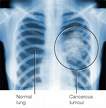 (HealthDay News) -- The Genentech drug Avastin (bevacizumab) has been approved by the U.S. Food and Drug Administration to treat the most common lung cancer, the agency said Thursday.
The drug was sanctioned -- in combination with a standard two-drug chemotherapy regimen -- to treat unresectable, locally advanced, non-squamous, non-small cell Lung cancer.
In studies involving 878 patients, the addition of Avastin improved average survival time to 12.3 months from 10.3 months among people who received only the other two drugs, carboplatin and paclitaxel, the agency said in a statement.
Non-small cell lung cancer will account for three-quarters of the 174,000 U.S. cases of lung cancer to be diagnosed this year, the agency said. Lung cancer is the nation's leading cause of cancer death among both men and women.
Avastin was first approved in 2004 to treat colorectal cancer.
More information
To learn more about lung cancer, visit the U.S. National Cancer Institute.
Tuesday, September 19, 2006
Air Pollution Linked to Lung Cancer
(HealthDay News) -- A study of Texas residents suggests that tiny metallic bits of air pollution could account for some cases of lung cancer.
The researchers aren't sure exactly how dangerous the particles are, nor do they fully understand their potential relationship to tobacco smoke.
Still, "It's disturbing that there might be something in the environment causing the problem," said study author Dr. Yvonne Coyle, an associate professor of internal medicine at the University of Texas Southwestern Medical Center at Dallas. "It could be these metals, and we need to look at that further."
According to Coyle, 10 percent to 15 percent of lung cancer cases occur among nonsmokers. One possible explanation: Inhalation of air pollution, especially fine particulate matter -- bits of metal that are too small to be seen with the naked eye but can still enter the lungs.
Mining, smelting and petroleum production all produce this type of pollution, Coyle said, as can motor vehicle exhaust.
But while air pollution has been directly linked to respiratory disorders and heart disease, its role in lung cancer is still under debate.
In the new study, Coyle and her colleagues tried to determine if exposure to metallic bits of air pollution was associated with higher levels of lung cancer. To find the answer, they compared lung cancer rates in 254 Texas counties from 1995-2000 to federal reports that companies filed when they released pollution between 1988 and 2000.
The researchers found an "association" between various types of lung cancer and releases of zinc, chromium and copper. When the study results were adjusted to take into account the effects of factors such as gender and race, zinc was still linked to lung cancer.
The findings of the federally funded study appear in the September issue of the Journal of Thoracic Oncology.
The study doesn't say how much more likely it is for people to develop lung cancer if they're exposed to higher levels of the pollutants.
Also, the role of smoking is unclear because the county-by-county statistics didn't reveal whether the individual lung cancer patients smoked. However, Coyle said smoking levels were consistent across the counties studied.
More research needs to be done to confirm the results and "determine who is at the greatest risk, given this exposure," Coyle said.
Dr. Michael Thun, head of epidemiologic research for the American Cancer Society, suggested that the value of the study is limited because it didn't take into account smoking by the lung cancer patients.
"It's clear that smoking is such a powerful cause of lung cancer that it's very difficult in wealthy countries to identify any separate contributions from air pollution," Thun said. "It's extremely hard to measure, and this study doesn't solve that problem."
More information
Learn more about air pollution from the U.S.
Environmental Protection Agency.
The researchers aren't sure exactly how dangerous the particles are, nor do they fully understand their potential relationship to tobacco smoke.
Still, "It's disturbing that there might be something in the environment causing the problem," said study author Dr. Yvonne Coyle, an associate professor of internal medicine at the University of Texas Southwestern Medical Center at Dallas. "It could be these metals, and we need to look at that further."
According to Coyle, 10 percent to 15 percent of lung cancer cases occur among nonsmokers. One possible explanation: Inhalation of air pollution, especially fine particulate matter -- bits of metal that are too small to be seen with the naked eye but can still enter the lungs.
Mining, smelting and petroleum production all produce this type of pollution, Coyle said, as can motor vehicle exhaust.
But while air pollution has been directly linked to respiratory disorders and heart disease, its role in lung cancer is still under debate.
In the new study, Coyle and her colleagues tried to determine if exposure to metallic bits of air pollution was associated with higher levels of lung cancer. To find the answer, they compared lung cancer rates in 254 Texas counties from 1995-2000 to federal reports that companies filed when they released pollution between 1988 and 2000.
The researchers found an "association" between various types of lung cancer and releases of zinc, chromium and copper. When the study results were adjusted to take into account the effects of factors such as gender and race, zinc was still linked to lung cancer.
The findings of the federally funded study appear in the September issue of the Journal of Thoracic Oncology.
The study doesn't say how much more likely it is for people to develop lung cancer if they're exposed to higher levels of the pollutants.
Also, the role of smoking is unclear because the county-by-county statistics didn't reveal whether the individual lung cancer patients smoked. However, Coyle said smoking levels were consistent across the counties studied.
More research needs to be done to confirm the results and "determine who is at the greatest risk, given this exposure," Coyle said.
Dr. Michael Thun, head of epidemiologic research for the American Cancer Society, suggested that the value of the study is limited because it didn't take into account smoking by the lung cancer patients.
"It's clear that smoking is such a powerful cause of lung cancer that it's very difficult in wealthy countries to identify any separate contributions from air pollution," Thun said. "It's extremely hard to measure, and this study doesn't solve that problem."
More information
Learn more about air pollution from the U.S.
Environmental Protection Agency.
Sunday, September 17, 2006
Ovary Removal Raises Young Women's Death Risk
(HealthDay News) -- Younger women who have had their ovaries removed should consider estrogen therapy if they are under the age of 45, a new study suggests.
Mayo Clinic researchers found that those who said no to hormone therapy faced a higher death risk than those who said yes.
Many women with high-risk family histories have their ovaries removed, a procedure known as an oophorectomy, to help them avoid cancer or other diseases. However, experts said this new data should give them pause when deciding whether to use hormone replacement therapy afterwards.
According to one specialist, the study suggests that estrogen may have different risks and benefits, depending on a woman's age: protecting health at a younger age, seemingly neutral at menopause, but harmful at an older age.
"The study tells us that estrogen for women under 45 is very important to maintain health. Estrogen is a complex hormone in its interactions in the body, and has importance far beyond the reproductive tract," said Dr. Bobbie Gostout, a Mayo Clinic gynecologic surgeon who was not involved in the research.
The findings are published in the Oct. 1 issue of Lancet Oncology.
In their study, the researchers developed a statistical model of death due to ovarian cancer, breast cancer, coronary heart disease, hip fracture and stroke. Risks for all of these illnesses have been tied to estrogen levels.
"We aimed to investigate survival patterns in a population-based sample of women who had received an oophorectomy, and compare these with women who had not received an oophorectomy," the researchers wrote.
Women who had oophorectomies for reasons other than cancer before menopause were compared with age-matched women in the same population who did not have oophorectomies.
There were nearly 1,300 women with unilateral oophorectomy (one ovary removed), nearly 1,100 with bilateral oophorectomy (both ovaries removed), and close to 2,400 controls in the study.
The team found that certain younger women who have prophylactic bilateral oophorectomy -- surgical removal of both ovaries -- were at an increased risk of death from all causes.
Overall, mortality was not increased in women who had both ovaries removed, but that changed when the researchers broke down the findings by age.
For example, mortality was significantly higher in women who had both ovaries removed before the age of 45 years than women with intact ovaries. Furthermore, this increased mortality was seen mainly in women who had not received estrogen supplementation to the age of 45 years.
Although having both ovaries removed before age 45 years is associated with increased death risk, it is uncertain whether it helps cause death, or is merely a marker of some other underlying risk, the authors wrote.
No increased mortality was recorded in women who had just one ovary removed, regardless of their age, the study found.
In the United States, prophylactic oophorectomy prevents about 1,000 cases of ovarian cancer each year. Over the last three decades doctors have been gradually increasing their recommendations that women have ovaries removed at time of hysterectomy to avoid the risk of cancer, "but that wonderful prevention has been at the cost of removing ovaries in 300,000 women per year," Gostout said.
"This 25-year study showed a decreased incidence in ovarian cancer, however that was countered by adverse health impact in other areas," said Gostout. The increased death risk did not show up for at least a decade, and was 1.7 times greater than normal, the study found.
The work is exciting because it fills in part of the information deficit for women in this age bracket, she added.
Before this study, people were applying lessons from Women's Health Initiative -- a study that focused on women 60 years and older -- to much younger women, recommending that estrogen not be used any longer than five years.
"This study shows that could be an error -- that women under the age of 50 face a different risk/benefit scenario than older women," Gostout said.
But whether all women who've had bilateral oophorectomy should receive estrogen therapy isn't yet proven, another expert said.
The researchers looked at associations in this study, "but don't prove cause and effect," noted Dr. Andrew Berchuck, director of gynecologic oncology at Duke University, and president-elect of the Society of Gynecologic Oncologists. Estrogen replacement after menopause is a "patient-by-patient decision, and physicians and patients must look at individual risk factors and symptoms," he said.
There's a long-running debate about what age to remove ovaries, "but there's very little science because these studies require long-term follow-up, and that's hard to do," Berchuck said. "This study adds some ammunition to the argument that says 'leave the ovaries in closer to the natural age of menopause' -- about 50 years -- but it's by no means conclusive," he said.
Gostout agreed these decisions are tough, and best left to an individual woman and her doctor.
"If a woman is considering hysterectomy, she will probably be invited to make a decision about her ovaries. That decision should be highly individualized," Gostout cautioned. "No woman should be told that because she's having a hysterectomy her ovaries must removed as well."
Rather, the decision is based on age and family risk for breast and ovarian cancer, she said.
If a woman needs her ovaries removed because of disease or elects to have them removed, estrogen replacement is recommended until the average age of menopause, age 50, Gostout said.
"Don't be scared away from estrogen-replacement therapy in the premenopausal age because there are some concerns in the postmenopausal age," Berchuck added.
In the meantime, women who have had their ovaries removed in the past should not be "alarmed or frightened," Gostout said, since "the increased risk [of illness] for any single woman is very tiny." She said it might also be reasonable for these women to ask their physicians about "estrogen-replacement therapy if they're not already taking it and they're less than 50 years of age."
More information
Find out more about hormone-replacement therapy at the U.S. National Heart, Lung, and Blood Institute.
Mayo Clinic researchers found that those who said no to hormone therapy faced a higher death risk than those who said yes.
Many women with high-risk family histories have their ovaries removed, a procedure known as an oophorectomy, to help them avoid cancer or other diseases. However, experts said this new data should give them pause when deciding whether to use hormone replacement therapy afterwards.
According to one specialist, the study suggests that estrogen may have different risks and benefits, depending on a woman's age: protecting health at a younger age, seemingly neutral at menopause, but harmful at an older age.
"The study tells us that estrogen for women under 45 is very important to maintain health. Estrogen is a complex hormone in its interactions in the body, and has importance far beyond the reproductive tract," said Dr. Bobbie Gostout, a Mayo Clinic gynecologic surgeon who was not involved in the research.
The findings are published in the Oct. 1 issue of Lancet Oncology.
In their study, the researchers developed a statistical model of death due to ovarian cancer, breast cancer, coronary heart disease, hip fracture and stroke. Risks for all of these illnesses have been tied to estrogen levels.
"We aimed to investigate survival patterns in a population-based sample of women who had received an oophorectomy, and compare these with women who had not received an oophorectomy," the researchers wrote.
Women who had oophorectomies for reasons other than cancer before menopause were compared with age-matched women in the same population who did not have oophorectomies.
There were nearly 1,300 women with unilateral oophorectomy (one ovary removed), nearly 1,100 with bilateral oophorectomy (both ovaries removed), and close to 2,400 controls in the study.
The team found that certain younger women who have prophylactic bilateral oophorectomy -- surgical removal of both ovaries -- were at an increased risk of death from all causes.
Overall, mortality was not increased in women who had both ovaries removed, but that changed when the researchers broke down the findings by age.
For example, mortality was significantly higher in women who had both ovaries removed before the age of 45 years than women with intact ovaries. Furthermore, this increased mortality was seen mainly in women who had not received estrogen supplementation to the age of 45 years.
Although having both ovaries removed before age 45 years is associated with increased death risk, it is uncertain whether it helps cause death, or is merely a marker of some other underlying risk, the authors wrote.
No increased mortality was recorded in women who had just one ovary removed, regardless of their age, the study found.
In the United States, prophylactic oophorectomy prevents about 1,000 cases of ovarian cancer each year. Over the last three decades doctors have been gradually increasing their recommendations that women have ovaries removed at time of hysterectomy to avoid the risk of cancer, "but that wonderful prevention has been at the cost of removing ovaries in 300,000 women per year," Gostout said.
"This 25-year study showed a decreased incidence in ovarian cancer, however that was countered by adverse health impact in other areas," said Gostout. The increased death risk did not show up for at least a decade, and was 1.7 times greater than normal, the study found.
The work is exciting because it fills in part of the information deficit for women in this age bracket, she added.
Before this study, people were applying lessons from Women's Health Initiative -- a study that focused on women 60 years and older -- to much younger women, recommending that estrogen not be used any longer than five years.
"This study shows that could be an error -- that women under the age of 50 face a different risk/benefit scenario than older women," Gostout said.
But whether all women who've had bilateral oophorectomy should receive estrogen therapy isn't yet proven, another expert said.
The researchers looked at associations in this study, "but don't prove cause and effect," noted Dr. Andrew Berchuck, director of gynecologic oncology at Duke University, and president-elect of the Society of Gynecologic Oncologists. Estrogen replacement after menopause is a "patient-by-patient decision, and physicians and patients must look at individual risk factors and symptoms," he said.
There's a long-running debate about what age to remove ovaries, "but there's very little science because these studies require long-term follow-up, and that's hard to do," Berchuck said. "This study adds some ammunition to the argument that says 'leave the ovaries in closer to the natural age of menopause' -- about 50 years -- but it's by no means conclusive," he said.
Gostout agreed these decisions are tough, and best left to an individual woman and her doctor.
"If a woman is considering hysterectomy, she will probably be invited to make a decision about her ovaries. That decision should be highly individualized," Gostout cautioned. "No woman should be told that because she's having a hysterectomy her ovaries must removed as well."
Rather, the decision is based on age and family risk for breast and ovarian cancer, she said.
If a woman needs her ovaries removed because of disease or elects to have them removed, estrogen replacement is recommended until the average age of menopause, age 50, Gostout said.
"Don't be scared away from estrogen-replacement therapy in the premenopausal age because there are some concerns in the postmenopausal age," Berchuck added.
In the meantime, women who have had their ovaries removed in the past should not be "alarmed or frightened," Gostout said, since "the increased risk [of illness] for any single woman is very tiny." She said it might also be reasonable for these women to ask their physicians about "estrogen-replacement therapy if they're not already taking it and they're less than 50 years of age."
More information
Find out more about hormone-replacement therapy at the U.S. National Heart, Lung, and Blood Institute.
Tuesday, August 22, 2006
More Bad News About Vitamin E?
 Q: More Bad News About Vitamin E? What’s your take on the new study showing that vitamin E increases heart failure risk and doesn’t help protect against heart disease or cancer? Should I stop taking vitamin E?-- Bette
A: I wouldn’t let this new vitamin E study upset you. First of all, it really doesn’t tell us anything new. The one new finding – an increased risk of heart failure among patients who took vitamin E – isn’t as significant as some journalists would have us believe.
I reviewed the study’s findings with Jeffrey Blumberg, Director of the Antioxidants Research Laboratory at the Jean Mayer USDA Human Nutrition Research Center on Aging at Tufts University. The first thing you should know about the study, called HOPE-TOO (an extension of an earlier vitamin E study), is that all the participants (whose average age was 66) already had some form of heart disease or diabetes and were taking a number of drugs.
Dr. Blumberg points out that when the study showed a striking benefit - a 28 percent reduction in lung cancer - the authors applied a stringent statistical test to see if the finding was real.
When subjected to this analysis, the lung cancer reduction disappeared. But the same test was not applied when the study showed that vitamin E led to a 13 percent increased risk of heart failure, a potentially life-threatening condition. What’s more, Dr. Blumberg notes, 12.1 percent of patients who were taking a placebo developed heart failure compared to 13.5 percent of those taking vitamin E. The difference – barely more than one percent - is trivial.
More importantly, no heart failure risk has ever been reported in any other of the many clinical trials of vitamin E.
The HOPE-TOO study was published in the March 16, 2005 issue of the Journal of the American Medical Association, and initially included 9,541 patients who took 400 IU daily of vitamin E or a placebo to see if long term use of vitamin E would reduce the risk of cancer and major cardiovascular events. The trial ran from 1993 to 1999 and then was extended until 2003 although fewer than half of the patients initially participating remained in the study for the final four years.
Results showed that vitamin E had "no clear impact" on the number of deaths from cancer or heart disease or on the occurrence of nonfatal cancers or cardiovascular disorders.
This isn’t particularly surprising. Dr. Blumberg notes that it would be hard for any single vitamin to have a strong, independent effect when combined in a study with multiple drugs for treatment of heart-related problems, including several that provide similar actions to vitamin E.
Vitamin E may not be a worthwhile treatment to add to other drugs for those who already have heart disease, but that doesn’t mean that healthy people should stop taking it. We know that vitamin E is an antioxidant, capable of combating the oxidative stress that contributes to heart disease, cancer, and Alzheimer’s disease.
I don’t believe that the HOPE-TOO findings about vitamin E are significant, and I do not think they should worry healthy people taking vitamin E. I’m becoming increasingly angry with the media coverage of these and similar findings. All too often, complicated results of scientific studies are boiled down to shock headlines or sound bites, leaving the public needlessly alarmed.
Even more discouraging is the willingness of prestigious journals like JAMA to publish editorials that are likely to generate scare headlines, especially when a careful reading of a study’s fine print doesn’t support such conclusions.
Andrew Weil, M.D.
–Author of:
Eight Weeks to Optimum Health
Spontaneous Healing
The Natural Mind
The Marriage of the Sun and Moon
Health and Healing
Natural Health, Natural Medicine
From Chocolate to Morphine (with Winifred Rosen)
Sunday, August 20, 2006
Health Highlights: Aug. 18, 2006
Here are some of the latest health and medical news developments, compiled by the editors of HealthDay:
Maker of 'Morning-After' Pill Reapplies to FDA
The maker of the controversial Plan B "morning-after" pill has resubmitted an application to the U.S. Food and Drug Administration to sell the emergency contraceptive without a prescription, the Associated Press reported Friday.
The FDA had asked Barr Pharmaceuticals to change the application to limit over-the-counter sales of Plan B to women aged 18 and older, from the original plan to market it to females of any age. Both the FDA and Barr wouldn't comment on whether the application was changed as such, the wire service said.
Plan B is now available in most states only by prescription. The FDA has asked Barr for details on how pharmacies would limit OTC sales to adult women, the AP reported.
"Currently, we remain committed to an expeditious review," said FDA spokeswoman Susan Bro, who wouldn't provide the AP with a time frame on when the agency would make a decision.
Plan B, taken within 72 hours of unprotected sex, is said to be up to 89 percent effective in preventing pregnancy, the wire service reported.
-----
Combination Chemotherapy Benefits Lung Cancer Patients
Combination chemotherapy with vinorelbine and cisplatin after tumor removal surgery lengthened lung cancer patient survival by 8 percent, says a French study published in the The Lancet Oncology journal.
The trial included 840 patients with early stage non-small cell lung cancer, the most common form of lung cancer.
"Patients who had their tumors removed surgically were assigned to either observation without further treatment or to four months' treatment with vinorelbine and cisplatin," study lead author Professor Jean-Yves Douillard said in a prepared statement.
"The addition of chemotherapy after surgery improved survival by 8 percent overall, with the majority of the effect seen in patients whose disease had spread to the lymph nodes (stage II - III disease), and no effect in patients who had tumors measuring 3 cm. or larger that had not spread to the lymph nodes," he said.
-----
Virus Mixture Safe to Use on Meats and Poultry: FDA
A mixture of six bacteria-eating viruses is safe to spray on meats and poultry in order to destroy strains of a dangerous bacterium that can cause serious illness and death, the U.S. Food and Drug Administration ruled Friday.
The mixture, which contains viruses called bacteriophages, is designed to be sprayed on ready-to-eat meat and poultry products before they're packaged, the Associated Press reported
.
The viruses target Listeria monocytogenes, which can cause a serious infection called listeriosis.
Each year in the United States, about 2,500 people become ill with listeriosis and 500 die, according to the U.S. Centers for Disease Control and Prevention.
Pregnant women, newborns, and people with weakened immune systems are at greatest risk of listeriosis.
The virus mixture is made by Intralytix Inc. of Baltimore. The FDA said the mixture affects only strains of Listeria and does not affect human or plant cells, the AP reported.
-----
U.S. Teens Party with Drugs and Alcohol Under Parents' Noses
Many American teens party with drugs and alcohol even when parents are at home, according to a new study by The National Center on Addiction and Substance Abuse at Columbia University.
The survey included 1,297 young people, aged 12 to 17. Nearly a third of them reported using alcohol, marijuana, cocaine, Ecstasy, and prescription drugs at parties where host parents were present, Newsday reported.
Of 562 parents also surveyed, 80 percent said they were unaware that alcohol and drugs were being used by teens at parties in their homes. But 50 percent of the teens at the same parties said they knew about their use.
"That shows just how out of touch the parents are," Joseph A. Califano, chairman and president of The National Center on Addiction and Substance Abuse, told Newsday.
The amount of drug and alcohol use apparently was much higher when parents weren't home, the survey found. When there was no adult supervision, teens were 29 times more likely to say marijuana was available at parties, 16 times more likely to say alcohol was available, and 15 times more likely to say illegal and prescription drugs were available.
-----
Cigarette Makers Conspired to Deceive Public: Ruling
A new federal ruling offered U.S. cigarette makers a mix of bad news and good news.
Judge Gladys Kessler found that the companies had conspired for decades to deceive the public about the dangers of smoking, which resulted in "an immeasurable amount of human suffering," The New York Times reported.
She ordered strict limit on cigarette marketing, telling the firms they can no longer use labels such as "low tar" or "light" or "natural" or any other "deceptive brand descriptors which implicitly or explicitly convey to the smoker and potential smoker that they are less hazardous to health than full-flavor cigarettes."
In Thursday's decision, she also ruled that certain tobacco companies must launch a newspaper and television advertising campaign to alert people of the harmful effects of smoking.
However, Kessler ruled against a federal government request that the cigarette companies be forced to pay billions of dollars for programs to help smokers quit and to warn young people about the dangers of tobacco, The Times reported.
Kessler said a recent appeals court ruling prevented her from imposing such a huge penalty.
-----
Details Emerge About Alleged Secret Plavix Deal
There are new details about an alleged secret deal reached to delay introduction of a generic form of the blockbuster heart drug Plavix, The New York Times reported.
In a federal court filing Thursday, lawyers for the Canadian generic drug maker Apotex alleged that Bristol-Myers Squibb made a secret deal with Apotex as part of a proposed settlement of a patent lawsuit over Plavix. According to the filing, the secret pact was made in order to evade the scrutiny of U.S. regulators reviewing the settlement, the Times reported.
The U.S. Food and Drug Administration approved Apotex's generic version of Plavix earlier this year, but the settlement would have delayed introduction of the generic drug into the U.S. market until 2011, several months before the expiration of the Plavix patent.
Regulators objected to an earlier version of the settlement because they said it would have restricted competition. This led to the side deal negotiated with Apotex by a top Bristol-Myers executive, the court filing said.
Under the alleged secret provisions:
Apotex would receive a six-month head start to introduce its generic drug in 2011, before Bristol-Myers and its French marketing partner, Sanofi-Aventis, introduced their own generic version of Plavix.
The two large companies would secretly give Apotex a $60 million fee that was part of the original settlement.
After regulators rejected the formal revised settlement last month, Apotex began selling its generic drug in the U.S. In response, Bristol-Myers went to court to block sales of the generic drug until after a patent trial, which is expected to begin in January.
Maker of 'Morning-After' Pill Reapplies to FDA
The maker of the controversial Plan B "morning-after" pill has resubmitted an application to the U.S. Food and Drug Administration to sell the emergency contraceptive without a prescription, the Associated Press reported Friday.
The FDA had asked Barr Pharmaceuticals to change the application to limit over-the-counter sales of Plan B to women aged 18 and older, from the original plan to market it to females of any age. Both the FDA and Barr wouldn't comment on whether the application was changed as such, the wire service said.
Plan B is now available in most states only by prescription. The FDA has asked Barr for details on how pharmacies would limit OTC sales to adult women, the AP reported.
"Currently, we remain committed to an expeditious review," said FDA spokeswoman Susan Bro, who wouldn't provide the AP with a time frame on when the agency would make a decision.
Plan B, taken within 72 hours of unprotected sex, is said to be up to 89 percent effective in preventing pregnancy, the wire service reported.
-----
Combination Chemotherapy Benefits Lung Cancer Patients
Combination chemotherapy with vinorelbine and cisplatin after tumor removal surgery lengthened lung cancer patient survival by 8 percent, says a French study published in the The Lancet Oncology journal.
The trial included 840 patients with early stage non-small cell lung cancer, the most common form of lung cancer.
"Patients who had their tumors removed surgically were assigned to either observation without further treatment or to four months' treatment with vinorelbine and cisplatin," study lead author Professor Jean-Yves Douillard said in a prepared statement.
"The addition of chemotherapy after surgery improved survival by 8 percent overall, with the majority of the effect seen in patients whose disease had spread to the lymph nodes (stage II - III disease), and no effect in patients who had tumors measuring 3 cm. or larger that had not spread to the lymph nodes," he said.
-----
Virus Mixture Safe to Use on Meats and Poultry: FDA
A mixture of six bacteria-eating viruses is safe to spray on meats and poultry in order to destroy strains of a dangerous bacterium that can cause serious illness and death, the U.S. Food and Drug Administration ruled Friday.
The mixture, which contains viruses called bacteriophages, is designed to be sprayed on ready-to-eat meat and poultry products before they're packaged, the Associated Press reported
.
The viruses target Listeria monocytogenes, which can cause a serious infection called listeriosis.
Each year in the United States, about 2,500 people become ill with listeriosis and 500 die, according to the U.S. Centers for Disease Control and Prevention.
Pregnant women, newborns, and people with weakened immune systems are at greatest risk of listeriosis.
The virus mixture is made by Intralytix Inc. of Baltimore. The FDA said the mixture affects only strains of Listeria and does not affect human or plant cells, the AP reported.
-----
U.S. Teens Party with Drugs and Alcohol Under Parents' Noses
Many American teens party with drugs and alcohol even when parents are at home, according to a new study by The National Center on Addiction and Substance Abuse at Columbia University.
The survey included 1,297 young people, aged 12 to 17. Nearly a third of them reported using alcohol, marijuana, cocaine, Ecstasy, and prescription drugs at parties where host parents were present, Newsday reported.
Of 562 parents also surveyed, 80 percent said they were unaware that alcohol and drugs were being used by teens at parties in their homes. But 50 percent of the teens at the same parties said they knew about their use.
"That shows just how out of touch the parents are," Joseph A. Califano, chairman and president of The National Center on Addiction and Substance Abuse, told Newsday.
The amount of drug and alcohol use apparently was much higher when parents weren't home, the survey found. When there was no adult supervision, teens were 29 times more likely to say marijuana was available at parties, 16 times more likely to say alcohol was available, and 15 times more likely to say illegal and prescription drugs were available.
-----
Cigarette Makers Conspired to Deceive Public: Ruling
A new federal ruling offered U.S. cigarette makers a mix of bad news and good news.
Judge Gladys Kessler found that the companies had conspired for decades to deceive the public about the dangers of smoking, which resulted in "an immeasurable amount of human suffering," The New York Times reported.
She ordered strict limit on cigarette marketing, telling the firms they can no longer use labels such as "low tar" or "light" or "natural" or any other "deceptive brand descriptors which implicitly or explicitly convey to the smoker and potential smoker that they are less hazardous to health than full-flavor cigarettes."
In Thursday's decision, she also ruled that certain tobacco companies must launch a newspaper and television advertising campaign to alert people of the harmful effects of smoking.
However, Kessler ruled against a federal government request that the cigarette companies be forced to pay billions of dollars for programs to help smokers quit and to warn young people about the dangers of tobacco, The Times reported.
Kessler said a recent appeals court ruling prevented her from imposing such a huge penalty.
-----
Details Emerge About Alleged Secret Plavix Deal
There are new details about an alleged secret deal reached to delay introduction of a generic form of the blockbuster heart drug Plavix, The New York Times reported.
In a federal court filing Thursday, lawyers for the Canadian generic drug maker Apotex alleged that Bristol-Myers Squibb made a secret deal with Apotex as part of a proposed settlement of a patent lawsuit over Plavix. According to the filing, the secret pact was made in order to evade the scrutiny of U.S. regulators reviewing the settlement, the Times reported.
The U.S. Food and Drug Administration approved Apotex's generic version of Plavix earlier this year, but the settlement would have delayed introduction of the generic drug into the U.S. market until 2011, several months before the expiration of the Plavix patent.
Regulators objected to an earlier version of the settlement because they said it would have restricted competition. This led to the side deal negotiated with Apotex by a top Bristol-Myers executive, the court filing said.
Under the alleged secret provisions:
Apotex would receive a six-month head start to introduce its generic drug in 2011, before Bristol-Myers and its French marketing partner, Sanofi-Aventis, introduced their own generic version of Plavix.
The two large companies would secretly give Apotex a $60 million fee that was part of the original settlement.
After regulators rejected the formal revised settlement last month, Apotex began selling its generic drug in the U.S. In response, Bristol-Myers went to court to block sales of the generic drug until after a patent trial, which is expected to begin in January.
Monday, July 17, 2006
MEDICAL MONSTER - Dr Ozone arrested over lethal cancer treatment
Dr Ozone arrested over lethal cancer treatment Quack who served two jail terms in US lured Western cancer patients to Chiang Mai for bogus cures, police say Chiang Mai police have arrested an Austrian national who allegedly killed at least one desperate Australian patient with a bogus cancer treatment he had advertised on a website.
Hellfried Sartori, 67, was arrested on Sunday in a Chiang Mai hotel and charged with fraud as well as practising medicine without a licence, police said.
Sartori will likely be extradited to Australia soon to face a murder charge, they said.
Sartori may be responsible for the deaths of several Australian cancer patients, who flew to Chiang Mai to receive the treatment in hotel rooms and later died at city hospitals, Lt-General Phanuphong Singhara na Ayutthaya told a press conference yesterday.
Sartori has served two prison terms in the United States - in New York state in May 1992 and in Washington DC in July 1998 - after administering his so-called "ozone treatments", Phanuphong said.
Websites claim the treatment cures everything from Aids and cancer to allergies and hardening of the arteries. It consists of injections of "liquid ozone", usually into a vein.
Australian police contacted their Thai counterparts over an investigation into the death of Kathleen Preston, an Australian cancer patient. Preston died at Maharaj Nakhon Chiang Mai Hospital on July 26 last year. An autopsy report found an excessive amount of potassium in her blood.
Police suspect Sartori injected Preston before she died.
Sartori has been seen with other Western cancer patients in Chiang Mai, police say.
He accompanied Melissa Judith Taylor, a New Zealander with lung cancer, to the intensive-care unit of Chiang Mai-Ram Hospital on June 22. She fell unconscious after he injected a liquid into her chest and neck.
Taylor's relatives later told police that they flew with her from New Zealand to Chiang Mai after reading an online advertisement in which Sartori was portrayed as a qualified practitioner of the "liquid ozone" treatment.
Sartori charged Taylor Bt900,000 for his "alternative medicine".
Taylor's relatives, who witnessed the treatment, said Sartori used a syringe to withdraw liquid from a small metal cylinder, then injected three doses into Taylor, in veins in her chest and neck.
She passed out after the injections and had to be rushed to hospital, Taylor's relatives said.
Phanuphong said a gas cylinder and a number of VCDs showing Sartori giving the treatment to a Western man were found in his hotel room.
Phanuphong said his officers were working with foreign police representatives based in Thailand to locate other victims of Sartori.
Dr Phattharawin Attasara, a senior physician with the National Cancer Institute of Thailand, dismissed Sartori's cure as preposterous.
Injecting a large amount of a foreign or inorganic substance into a vein would only cause the patient to faint or possibly die, the doctor said.
Citing information provided by Interpol, police said Sartori graduated from Graz University in Vienna and was a member of Austria's medical council until October 1, 1974.
He is in police custody.
Source: Nation
Hellfried Sartori, 67, was arrested on Sunday in a Chiang Mai hotel and charged with fraud as well as practising medicine without a licence, police said.
Sartori will likely be extradited to Australia soon to face a murder charge, they said.
Sartori may be responsible for the deaths of several Australian cancer patients, who flew to Chiang Mai to receive the treatment in hotel rooms and later died at city hospitals, Lt-General Phanuphong Singhara na Ayutthaya told a press conference yesterday.
Sartori has served two prison terms in the United States - in New York state in May 1992 and in Washington DC in July 1998 - after administering his so-called "ozone treatments", Phanuphong said.
Websites claim the treatment cures everything from Aids and cancer to allergies and hardening of the arteries. It consists of injections of "liquid ozone", usually into a vein.
Australian police contacted their Thai counterparts over an investigation into the death of Kathleen Preston, an Australian cancer patient. Preston died at Maharaj Nakhon Chiang Mai Hospital on July 26 last year. An autopsy report found an excessive amount of potassium in her blood.
Police suspect Sartori injected Preston before she died.
Sartori has been seen with other Western cancer patients in Chiang Mai, police say.
He accompanied Melissa Judith Taylor, a New Zealander with lung cancer, to the intensive-care unit of Chiang Mai-Ram Hospital on June 22. She fell unconscious after he injected a liquid into her chest and neck.
Taylor's relatives later told police that they flew with her from New Zealand to Chiang Mai after reading an online advertisement in which Sartori was portrayed as a qualified practitioner of the "liquid ozone" treatment.
Sartori charged Taylor Bt900,000 for his "alternative medicine".
Taylor's relatives, who witnessed the treatment, said Sartori used a syringe to withdraw liquid from a small metal cylinder, then injected three doses into Taylor, in veins in her chest and neck.
She passed out after the injections and had to be rushed to hospital, Taylor's relatives said.
Phanuphong said a gas cylinder and a number of VCDs showing Sartori giving the treatment to a Western man were found in his hotel room.
Phanuphong said his officers were working with foreign police representatives based in Thailand to locate other victims of Sartori.
Dr Phattharawin Attasara, a senior physician with the National Cancer Institute of Thailand, dismissed Sartori's cure as preposterous.
Injecting a large amount of a foreign or inorganic substance into a vein would only cause the patient to faint or possibly die, the doctor said.
Citing information provided by Interpol, police said Sartori graduated from Graz University in Vienna and was a member of Austria's medical council until October 1, 1974.
He is in police custody.
Source: Nation
Saturday, May 27, 2006
Arsenic in Old Wood?
Arsenic in Old Wood?
Provided by: DrWeil.com
Q: I heard that there is arsenic in wood used to build outdoor decks, that kids can get the arsenic on their hands and that the stuff is carcinogenic. Do you have any information on this? I'm very worried. -- Cyndie
A: You're right. There is arsenic in lumber that has been used for years to make decks, fences, picnic tables and even some playground equipment. Technically speaking, the lumber is treated with chromium copper arsenate (CCA), a preservative used to prevent the wood from decaying.
The good news is that since the beginning of this year, lumber manufacturers are no longer selling wood impregnated with CCA. But that isn't much comfort if you have young children and an old deck or old yard and porch furniture.
Although arsenic is a carcinogen, manufacturers insist that the old, treated wood is safe for people, plants and animals when used as recommended. However, advocacy groups maintain that the chemical can rub off on contact and that the lumber remains dangerous for 10 to 15 years. And a staff report to the United States Consumer Product Safety Commission concluded that children exposed to the treated wood may face an increased lifetime risk of lung cancer or bladder cancer.
If you have a deck made with CCA-treated lumber, you can test it for arsenic by ordering test kits online for about $20. Results will tell you how much arsenic is in wood. You can then decide if you want to replace the furniture or insist that your kids wash their hands well after playing on it, especially before eating.
You can also protect your family by applying a sealant to CCA-treated wood. Pigmented deck stains provide the most protection, but you'll have to reseal frequently, as often as twice a year.
If you decide to use a sealant, be sure not to sand the deck beforehand -- sanding will release arsenic-laden sawdust. Be sure to wear a protective mask! And don't pressure-wash your deck before sealing -- the high pressure water can loosen arsenic-contaminated particles and release them into the air. You can learn more about this issue through the Washington-based Environmental Working Group at http://www.ewg.org/.
Andrew Weil, M.D. –Author of:
Eight Weeks to Optimum Health
Spontaneous Healing
The Natural Mind
The Marriage of the Sun and Moon
Health and Healing
Natural Health, Natural Medicine
From Chocolate to Morphine (with Winifred Rosen)
Provided by: DrWeil.com
Q: I heard that there is arsenic in wood used to build outdoor decks, that kids can get the arsenic on their hands and that the stuff is carcinogenic. Do you have any information on this? I'm very worried. -- Cyndie
A: You're right. There is arsenic in lumber that has been used for years to make decks, fences, picnic tables and even some playground equipment. Technically speaking, the lumber is treated with chromium copper arsenate (CCA), a preservative used to prevent the wood from decaying.
The good news is that since the beginning of this year, lumber manufacturers are no longer selling wood impregnated with CCA. But that isn't much comfort if you have young children and an old deck or old yard and porch furniture.
Although arsenic is a carcinogen, manufacturers insist that the old, treated wood is safe for people, plants and animals when used as recommended. However, advocacy groups maintain that the chemical can rub off on contact and that the lumber remains dangerous for 10 to 15 years. And a staff report to the United States Consumer Product Safety Commission concluded that children exposed to the treated wood may face an increased lifetime risk of lung cancer or bladder cancer.
If you have a deck made with CCA-treated lumber, you can test it for arsenic by ordering test kits online for about $20. Results will tell you how much arsenic is in wood. You can then decide if you want to replace the furniture or insist that your kids wash their hands well after playing on it, especially before eating.
You can also protect your family by applying a sealant to CCA-treated wood. Pigmented deck stains provide the most protection, but you'll have to reseal frequently, as often as twice a year.
If you decide to use a sealant, be sure not to sand the deck beforehand -- sanding will release arsenic-laden sawdust. Be sure to wear a protective mask! And don't pressure-wash your deck before sealing -- the high pressure water can loosen arsenic-contaminated particles and release them into the air. You can learn more about this issue through the Washington-based Environmental Working Group at http://www.ewg.org/.
Andrew Weil, M.D. –Author of:
Eight Weeks to Optimum Health
Spontaneous Healing
The Natural Mind
The Marriage of the Sun and Moon
Health and Healing
Natural Health, Natural Medicine
From Chocolate to Morphine (with Winifred Rosen)
Tuesday, May 23, 2006
Rethinking Sunscreen?
 Rethinking Sunscreen?
Provided by: DrWeil.com
Q: I've been using sunscreen religiously, and now I hear that by protecting my skin, I may not be getting enough vitamin D. Is this true? -- Nanci
A: Yes, using sunscreen does block production of vitamin D, which our bodies make by using ultraviolet rays of the sun. This suggests that the advice to use sunscreen whenever you're out-of-doors may be contributing to widespread deficiency of vitamin D, which we need for optimum health. In addition to its crucial role in bone-building (it facilitates calcium absorption and promotes bone mineralization), mounting evidence suggests that vitamin D also protects against multiple sclerosis and a number of types of cancer including lymphoma, colon cancer, lung cancer, and even skin cancer.
These new findings have led some researchers to suggest that we may have gone overboard by insisting that everyone wear sunscreen whenever in the sun. Even some dermatologists have begun to question whether current sunscreen recommendations should be modified. The problem is that no one is sure exactly how to modify them. So far, I've seen no alternative recommendations for sunscreen use. One possibility might be to wait until actually getting in the sun to apply sunscreen, or putting it on 15 minutes before exposure, rather than the recommended 30 minutes.
I recently changed my vitamin D recommendation from 400 IU per day to 1,000 IU per day because of compelling evidence that adults aren't getting enough. And 1,000 IU might still be a low recommendation. Other than supplements or the sun, we can obtain vitamin D from such foods as fortified milk and cereals as well as from eggs, salmon, tuna, mackerel, and sardines.
To make sure you're getting adequate vitamin D you could cut back slightly on sunscreen use.
Don't bake on the beach, or spend a summer's day outdoors unprotected. Certainly, use sunscreen if you will be outdoors when the sun's radiation is at its most intense - especially between 10 am and 2 pm, near the summer solstice, and at high altitudes or low latitudes. But it may do you more good than harm to get out in the sun for 15 minutes or so without protection several days a week. Afterwards, go back inside and slather on the sunscreen.
Andrew Weil, M.D. –Author of:
Eight Weeks to Optimum Health
Spontaneous Healing
The Natural Mind
The Marriage of the Sun and Moon
Health and Healing
Natural Health, Natural Medicine
From Chocolate to Morphine (with Winifred Rosen)
Cutting Back on Cigarettes?
Cutting Back on Cigarettes?
Provided by: DrWeil.com
Q: I know I should quit smoking, but so far, no luck. However, I have cut back to about five cigarettes a day, way below the number I used to smoke. How does this affect my risks of smoking-related diseases? -- Mia M.
A: The timing of your question is perfect. Today is the 29th Great American Smokeout, an annual event sponsored by the American Cancer Society to challenge smokers to quit. I hope you'll participate and will make an effort to stop smoking completely.
While cutting back on cigarettes can reduce your risk of lung cancer, if you continue to smoke just a few cigarettes a day, your risk is still significantly higher than that of nonsmokers. Danish researchers looked at this issue in a study that followed nearly 20,000 men and women for as long as 31 years. The findings, published in the Sept. 28, 2005 issue of the Journal of the American Medical Association, showed that smokers who cut back from 20 cigarettes daily to fewer than 10 reduced their risk of lung cancer by about 27 percent.
Participants who quit during the study lowered their risk by 50 percent compared to heavy smokers (defined in this study as those who smoked 15 or more cigarettes a day). Former smokers who participated lowered their cancer risk by 83 percent. Of course, risks were lowest of all among nonsmokers.
Another study, in Norway, found that men who smoked only one to four cigarettes per day had a risk of dying of lung cancer that was three times higher than men who didn't smoke at all. Women who smoked one to four cigarettes daily were five times more likely to die of lung cancer than women who didn't smoke. What's more, this study found a significantly increased risk of dying from heart disease or other causes among both men and women who smoked only one to four cigarettes a day.
The study was published in the October 2005 issue of Tobacco Control.
Please commit yourself today to making further efforts to stop smoking. You can get help by calling the American Cancer Society's Quitline at 1-877-YES-QUIT. You also might explore the smoking cessation program designed by my colleague Steve Gurgevich, Ph.D., who uses hypnosis to help motivated people quit, in his Smoking: Hypnotic Tonic to Remove Tobacco Addiction CD set.
Andrew Weil, M.D. –Author of:
Eight Weeks to Optimum Health
Spontaneous Healing
The Natural Mind
The Marriage of the Sun and Moon
Health and Healing
Natural Health, Natural Medicine
From Chocolate to Morphine (with Winifred Rosen)
Provided by: DrWeil.com
Q: I know I should quit smoking, but so far, no luck. However, I have cut back to about five cigarettes a day, way below the number I used to smoke. How does this affect my risks of smoking-related diseases? -- Mia M.
A: The timing of your question is perfect. Today is the 29th Great American Smokeout, an annual event sponsored by the American Cancer Society to challenge smokers to quit. I hope you'll participate and will make an effort to stop smoking completely.
While cutting back on cigarettes can reduce your risk of lung cancer, if you continue to smoke just a few cigarettes a day, your risk is still significantly higher than that of nonsmokers. Danish researchers looked at this issue in a study that followed nearly 20,000 men and women for as long as 31 years. The findings, published in the Sept. 28, 2005 issue of the Journal of the American Medical Association, showed that smokers who cut back from 20 cigarettes daily to fewer than 10 reduced their risk of lung cancer by about 27 percent.
Participants who quit during the study lowered their risk by 50 percent compared to heavy smokers (defined in this study as those who smoked 15 or more cigarettes a day). Former smokers who participated lowered their cancer risk by 83 percent. Of course, risks were lowest of all among nonsmokers.
Another study, in Norway, found that men who smoked only one to four cigarettes per day had a risk of dying of lung cancer that was three times higher than men who didn't smoke at all. Women who smoked one to four cigarettes daily were five times more likely to die of lung cancer than women who didn't smoke. What's more, this study found a significantly increased risk of dying from heart disease or other causes among both men and women who smoked only one to four cigarettes a day.
The study was published in the October 2005 issue of Tobacco Control.
Please commit yourself today to making further efforts to stop smoking. You can get help by calling the American Cancer Society's Quitline at 1-877-YES-QUIT. You also might explore the smoking cessation program designed by my colleague Steve Gurgevich, Ph.D., who uses hypnosis to help motivated people quit, in his Smoking: Hypnotic Tonic to Remove Tobacco Addiction CD set.
Andrew Weil, M.D. –Author of:
Eight Weeks to Optimum Health
Spontaneous Healing
The Natural Mind
The Marriage of the Sun and Moon
Health and Healing
Natural Health, Natural Medicine
From Chocolate to Morphine (with Winifred Rosen)
Lung Cancer More Likely to Kill Non-Smoking Men
Lung Cancer More Likely to Kill Non-Smoking Men Study Refutes Idea That Women Are More Vulnerable
May 17, 2006 10:04:44 AM PST
Contrary to popular belief, women who have never smoked are not more likely to die of Lung cancer than men who never smoked. In fact, a new analysis by American Cancer Society researchers shows exactly the opposite is true.
The finding comes from 2 large, long-term ACS studies that included nearly a million non-smokers. Results appear in the May 17 issue of the Journal of the National Cancer Institute.
Lead researcher Michael Thun, MD, and colleagues compared lung cancer death rates among male and female non-smokers in the Cancer Prevention Study I (CPS-I) and Cancer Prevention Study II (CPS-II). The people in the 2 studies had answered questionnaires about their smoking history and other lifestyle factors when they first enrolled. The CPS-I followed participants from 1959-1972, and the CPS-II tracked participants from 1982-2000.
In both studies, lung cancer death rates were higher among men than women. In the CPS-I, the lung cancer death rate in men was nearly 19 per 100,000, but it was just 12 per 100,000 in women. That gap was narrower, but still statistically significant, in the CPS-II: 17 per 100,000 in men and 14 per 100,000 in women.
"Our findings are reassuring for women who've never smoked and who may have been alarmed by recent reports indicating their risk was higher than it actually is," said Thun, who is vice president of epidemiology and surveillance research at ACS.
Thun said there is a perception among many doctors that lung cancer is more common in non-smoking women because many of the non-smokers they see who have lung cancer are women. But that may simply be because there are 3 times as many women who have never smoked.
"Women didn't start smoking until later in the 20th century, so there are a lot more older women who've never smoked," he explained. "The risk of developing lung cancer -- like most solid tumors -- increases with age. It increases a lot faster if you're a current or former smoker, but it increases even if you've never smoked."
Lung Cancer Patients 'Shortchanged'
The issue of lung cancer in non-smokers was thrown into the spotlight earlier this year when Dana Reeve, widow of actor Christopher Reeve, died of the disease despite never having smoked. But active smoking isn't the only cause of lung cancer. People can also get this disease through exposure to secondhand smoke, asbestos, radon, and radiation therapy, among other causes.
In fact, about 10% -15% of all lung cancer deaths in the US -- between 17,000 to 26,000 each year -- are unrelated to active smoking. Of those, about 15,000 are in people who never smoked.
If all these cases of lung cancer were considered separately from smoking-related lung cancer, they would rank between 6 and 8 on the list of most common fatal cancers, Thun and his colleagues say. The study didn't find any evidence that lung cancer rates in non-smokers have changed substantially over the years.
Nevertheless, lung cancer still gets shortchanged when it comes to public attitudes and the search for cures, Thun said.
"The funding for lung cancer is small, given the burden of suffering and death that it causes, in part because of this unspoken assumption that blames the person for smoking," he said. "But the paper points out that lung cancer deaths due to factors other than smoking [constitute] a substantial burden. And then it gets shortchanged again because tobacco control gets underfunded below its contribution to suffering and death."
Differences in Whites, African-Americans
Thun's analysis also found racial differences in lung cancer deaths. African-American women who never smoked had significantly higher lung cancer death rates than white women who never smoked, and the gap got bigger between the first and second study. Rates were also higher among African-American men than white men, but there were too few black men in the first study to make the finding statistically meaningful.
Thun says these discoveries merit further research.
Lung cancer death rates have been higher among African-American men than white men since the 1960s, but most of this difference was thought to be due to different smoking patterns between the races. African-American men are a little more likely to be smokers, tend to smoke cigarettes with higher levels of tar, and tend to have higher levels of smoking-related chemicals in their blood.
The fact that this new analysis found a large difference in non-smokers, too, suggests there's more to the picture than just smoking habits.
"That is a novel finding that needs to be followed up," Thun said.
Citation: "Lung Cancer Death Rates in Lifelong Nonsmokers."Published in the May 17, 2006, Journal of the National Cancer Institute (Vol. 98, No. 10: 691-699). First author: Michael J. Thun, MD, American Cancer Society.
May 17, 2006 10:04:44 AM PST
Contrary to popular belief, women who have never smoked are not more likely to die of Lung cancer than men who never smoked. In fact, a new analysis by American Cancer Society researchers shows exactly the opposite is true.
The finding comes from 2 large, long-term ACS studies that included nearly a million non-smokers. Results appear in the May 17 issue of the Journal of the National Cancer Institute.
Lead researcher Michael Thun, MD, and colleagues compared lung cancer death rates among male and female non-smokers in the Cancer Prevention Study I (CPS-I) and Cancer Prevention Study II (CPS-II). The people in the 2 studies had answered questionnaires about their smoking history and other lifestyle factors when they first enrolled. The CPS-I followed participants from 1959-1972, and the CPS-II tracked participants from 1982-2000.
In both studies, lung cancer death rates were higher among men than women. In the CPS-I, the lung cancer death rate in men was nearly 19 per 100,000, but it was just 12 per 100,000 in women. That gap was narrower, but still statistically significant, in the CPS-II: 17 per 100,000 in men and 14 per 100,000 in women.
"Our findings are reassuring for women who've never smoked and who may have been alarmed by recent reports indicating their risk was higher than it actually is," said Thun, who is vice president of epidemiology and surveillance research at ACS.
Thun said there is a perception among many doctors that lung cancer is more common in non-smoking women because many of the non-smokers they see who have lung cancer are women. But that may simply be because there are 3 times as many women who have never smoked.
"Women didn't start smoking until later in the 20th century, so there are a lot more older women who've never smoked," he explained. "The risk of developing lung cancer -- like most solid tumors -- increases with age. It increases a lot faster if you're a current or former smoker, but it increases even if you've never smoked."
Lung Cancer Patients 'Shortchanged'
The issue of lung cancer in non-smokers was thrown into the spotlight earlier this year when Dana Reeve, widow of actor Christopher Reeve, died of the disease despite never having smoked. But active smoking isn't the only cause of lung cancer. People can also get this disease through exposure to secondhand smoke, asbestos, radon, and radiation therapy, among other causes.
In fact, about 10% -15% of all lung cancer deaths in the US -- between 17,000 to 26,000 each year -- are unrelated to active smoking. Of those, about 15,000 are in people who never smoked.
If all these cases of lung cancer were considered separately from smoking-related lung cancer, they would rank between 6 and 8 on the list of most common fatal cancers, Thun and his colleagues say. The study didn't find any evidence that lung cancer rates in non-smokers have changed substantially over the years.
Nevertheless, lung cancer still gets shortchanged when it comes to public attitudes and the search for cures, Thun said.
"The funding for lung cancer is small, given the burden of suffering and death that it causes, in part because of this unspoken assumption that blames the person for smoking," he said. "But the paper points out that lung cancer deaths due to factors other than smoking [constitute] a substantial burden. And then it gets shortchanged again because tobacco control gets underfunded below its contribution to suffering and death."
Differences in Whites, African-Americans
Thun's analysis also found racial differences in lung cancer deaths. African-American women who never smoked had significantly higher lung cancer death rates than white women who never smoked, and the gap got bigger between the first and second study. Rates were also higher among African-American men than white men, but there were too few black men in the first study to make the finding statistically meaningful.
Thun says these discoveries merit further research.
Lung cancer death rates have been higher among African-American men than white men since the 1960s, but most of this difference was thought to be due to different smoking patterns between the races. African-American men are a little more likely to be smokers, tend to smoke cigarettes with higher levels of tar, and tend to have higher levels of smoking-related chemicals in their blood.
The fact that this new analysis found a large difference in non-smokers, too, suggests there's more to the picture than just smoking habits.
"That is a novel finding that needs to be followed up," Thun said.
Citation: "Lung Cancer Death Rates in Lifelong Nonsmokers."Published in the May 17, 2006, Journal of the National Cancer Institute (Vol. 98, No. 10: 691-699). First author: Michael J. Thun, MD, American Cancer Society.
Sunday, May 21, 2006
Sugar and Cancer
Sugar and Cancer
Originally printed by
The Alternative Research Foundation
It puzzles me why the simple concept "sugar feeds cancer" can be so dramatically overlooked as part of a comprehensive cancer treatment plan.
Of the 4 million cancer patients being treated in America today, hardly any are offered any scientifically guided nutrition therapy beyond being told to "just eat good foods." Most patients I work with arrive with a complete lack of nutritional advice.
I believe many cancer patients would have a major improvement in their outcome if they controlled the supply of cancer's preferred fuel, glucose.
By slowing the cancer's growth, patients allow their immune systems and medical debulking therapies -- chemotherapy, radiation and surgery to reduce the bulk of the tumor mass -- to catch up to the disease.
Controlling one's blood-glucose levels through diet, supplements, exercise, meditation and prescription drugs when necessary can be one of the most crucial components to a cancer recovery program. The sound bite -- sugar feeds cancer -- is simple. The explanation is a little more complex.
The 1931 Nobel laureate in medicine, German Otto Warburg, Ph.D., first discovered that cancer cells have a fundamentally different energy metabolism compared to healthy cells.
The crux of his Nobel thesis was that malignant tumors frequently exhibit an increase in anaerobic glycolysis -- a process whereby glucose is used as a fuel by cancer cells with lactic acid as an anaerobic byproduct -- compared to normal tissues.
The large amount of lactic acid produced by this fermentation of glucose from cancer cells is then transported to the liver. This conversion of glucose to lactate generates a lower, more acidic pH in cancerous tissues as well as overall physical fatigue from lactic acid buildup. Thus, larger tumors tend to exhibit a more acidic pH.
This inefficient pathway for energy metabolism yields only 2 moles of adenosine triphosphate (ATP) energy per mole of glucose, compared to 38 moles of ATP in the complete aerobic oxidation of glucose.
By extracting only about 5 percent (2 vs. 38 moles of ATP) of the available energy in the food supply and the body's calorie stores, the cancer is "wasting" energy, and the patient becomes tired and undernourished. This vicious cycle increases body wasting.
It is one reason why 40 percent of cancer patients die from malnutrition, or cachexia. Hence, cancer therapies should encompass regulating blood-glucose levels via diet, supplements, non-oral solutions for cachectic patients who lose their appetite, medication, exercise, gradual weight loss and stress reduction. Professional guidance and patient self-discipline are crucial at this point in the cancer process. The quest is not to eliminate sugars or carbohydrates from the diet but rather to control blood glucose within a narrow range to help starve the cancer and bolster immune function.
The glycemic index is a measure of how a given food affects blood-glucose levels, with each food assigned a numbered rating. The lower the rating, the slower the digestion and absorption process, which provides a healthier, more gradual infusion of sugars into the bloodstream.
Conversely, a high rating means blood-glucose levels are increased quickly, which stimulates the pancreas to secrete insulin to drop blood-sugar levels. This rapid fluctuation of blood-sugar levels is unhealthy because of the stress it places on the body.
Sugar in the Body and Diet
Sugar is a generic term used to identify simple carbohydrates, which includes monosaccharides such as fructose, glucose and galactose; and disaccharides such as maltose and sucrose (white table sugar). Think of these sugars as different-shaped bricks in a wall.
When fructose is the primary monosaccharide brick in the wall, the glycemic index registers as healthier, since this simple sugar is slowly absorbed in the gut, then converted to glucose in the liver. This makes for "time-release foods," which offer a more gradual rise and fall in blood-glucose levels.
If glucose is the primary monosaccharide brick in the wall, the glycemic index will be higher and less healthy for the individual. As the brick wall is torn apart in digestion, the glucose is pumped across the intestinal wall directly into the bloodstream, rapidly raising blood-glucose levels.
In other words, there is a "window of efficacy" for glucose in the blood: levels too low make one feel lethargic and can create clinical hypoglycemia; levels too high start creating the rippling effect of diabetic health problems.
The 1997 American Diabetes Association blood-glucose standards consider 126 mg glucose/dL blood or greater to be diabetic; 111 to 125 mg/dL is impaired glucose tolerance and less than 110 mg/dL is considered normal.
Meanwhile, the Paleolithic diet of our ancestors, which consisted of lean meats, vegetables and small amounts of whole grains, nuts, seeds and fruits, is estimated to have generated blood glucose levels between 60 and 90 mg/dL.
Obviously, today's high-sugar diets are having unhealthy effects as far as blood-sugar is concerned. Excess blood glucose may initiate yeast overgrowth, blood vessel deterioration, heart disease and other health conditions.
Understanding and using the glycemic index is an important aspect of diet modification for cancer patients. However, there is also evidence that sugars may feed cancer more efficiently than starches (comprised of long chains of simple sugars), making the index slightly misleading.
A study of rats fed diets with equal calories from sugars and starches, for example, found the animals on the high-sugar diet developed more cases of breast cancer.
The glycemic index is a useful tool in guiding the cancer patient toward a healthier diet, but it is not infallible. By using the glycemic index alone, one could be led to thinking a cup of white sugar is healthier than a baked potato.
This is because the glycemic index rating of a sugary food may be lower than that of a starchy food. To be safe, I recommend less fruit, more vegetables, and little to no refined sugars in the diet of cancer patients.
What the Literature Says
A mouse model of human breast cancer demonstrated that tumors are sensitive to blood-glucose levels. Sixty-eight mice were injected with an aggressive strain of breast cancer, then fed diets to induce either high blood-sugar (hyperglycemia), normoglycemia or low blood-sugar (hypoglycemia).
There was a dose-dependent response in which the lower the blood glucose, the greater the survival rate. After 70 days, 8 of 24 hyperglycemic mice survived compared to 16 of 24 normoglycemic and 19 of 20 hypoglycemic.
This suggests that regulating sugar intake is key to slowing breast tumor growth.
In a human study, 10 healthy people were assessed for fasting blood-glucose levels and the phagocytic index of neutrophils, which measures immune-cell ability to envelop and destroy invaders such as cancer. Eating 100 g carbohydrates from glucose, sucrose, honey and orange juice all significantly decreased the capacity of neutrophils to engulf bacteria. Starch did not have this effect.
A four-year study at the National Institute of Public Health and Environmental Protection in the Netherlands compared 111 biliary tract cancer patients with 480 controls. Cancer risk associated with the intake of sugars, independent of other energy sources, more than doubled for the cancer patients.
Furthermore, an epidemiological study in 21 modern countries that keep track of morbidity and mortality (Europe, North America, Japan and others) revealed that sugar intake is a strong risk factor that contributes to higher breast cancer rates, particularly in older women.
Limiting sugar consumption may not be the only line of defense. In fact, an interesting botanical extract from the avocado plant (Persea americana) is showing promise as a new cancer adjunct.
When a purified avocado extract called mannoheptulose was added to a number of tumor cell lines tested in vitro by researchers in the Department of Biochemistry at Oxford University in Britain, they found it inhibited tumor cell glucose uptake by 25 to 75 percent, and it inhibited the enzyme glucokinase responsible for glycolysis. It also inhibited the growth rate of the cultured tumor cell lines.
The same researchers gave lab animals a 1.7 mg/g body weight dose of mannoheptulose for five days; it reduced tumors by 65 to 79 percent. Based on these studies, there is good reason to believe that avocado extract could help cancer patients by limiting glucose to the tumor cells.
Since cancer cells derive most of their energy from anaerobic glycolysis, Joseph Gold, M.D., director of the Syracuse (N.Y.) Cancer Research Institute and former U.S. Air Force research physician, surmised that a chemical called hydrazine sulfate, used in rocket fuel, could inhibit the excessive gluconeogenesis (making sugar from amino acids) that occurs in cachectic cancer patients.
Gold's work demonstrated hydrazine sulfate's ability to slow and reverse cachexia in advanced cancer patients. A placebo-controlled trial followed 101 cancer patients taking either 6 mg hydrazine sulfate three times/day or placebo. After one month, 83 percent of hydrazine sulfate patients increased their weight, compared to 53 percent on placebo.
A similar study by the same principal researchers, partly funded by the National Cancer Institute in Bethesda, Md., followed 65 patients. Those who took hydrazine sulfate and were in good physical condition before the study began lived an average of 17 weeks longer.
The medical establishment may be missing the connection between sugar and its role in tumorigenesis. Consider the million-dollar positive emission tomography device, or PET scan, regarded as one of the ultimate cancer-detection tools. PET scans use radioactively labeled glucose to detect sugar-hungry tumor cells. PET scans are used to plot the progress of cancer patients and to assess whether present protocols are effective.
In Europe, the "sugar feeds cancer" concept is so well accepted that oncologists, or cancer doctors, use the Systemic Cancer Multistep Therapy (SCMT) protocol. Conceived by Manfred von Ardenne in Germany in 1965, SCMT entails injecting patients with glucose to increase blood-glucose concentrations.
This lowers pH values in cancer tissues via lactic acid formation. In turn, this intensifies the thermal sensitivity of the malignant tumors and also induces rapid growth of the cancer.
Patients are then given whole-body hyperthermia (42 C core temperature) to further stress the cancer cells, followed by chemotherapy or radiation.
SCMT was tested on 103 patients with metastasized cancer or recurrent primary tumors in a clinical phase-I study at the Von Ardenne Institute of Applied Medical Research in Dresden, Germany. Five-year survival rates in SCMT-treated patients increased by 25 to 50 percent, and the complete rate of tumor regression increased by 30 to 50 percent.
The protocol induces rapid growth of the cancer, then treats the tumor with toxic therapies for a dramatic improvement in outcome.
The irrefutable role of glucose in the growth and metastasis of cancer cells can enhance many therapies. Some of these include diets designed with the glycemic index in mind to regulate increases in blood glucose, hence selectively starving the cancer cells; low-glucose TPN solutions; avocado extract to inhibit glucose uptake in cancer cells; hydrazine sulfate to inhibit gluconeogenesis in cancer cells; and SCMT.
A female patient in her 50s, with lung cancer, came to our clinic, having been given a death sentence by her Florida oncologist. She was cooperative and understood the connection between nutrition and cancer. She changed her diet considerably, leaving out 90 percent of the sugar she used to eat.
She found that wheat bread and oat cereal now had their own wild sweetness, even without added sugar.
With appropriately restrained medical therapy -- including high-dose radiation targeted to tumor sites and fractionated chemotherapy, a technique that distributes the normal one large weekly chemo dose into a 60-hour infusion lasting days -- a good attitude and an optimal nutrition program which included Sam's formula nine times/day, she beat her terminal lung cancer cancer.
I saw her last month, five years later and still disease-free, probably looking better than the doctor who told her there was no hope.
more informations:
Originally printed by
The Alternative Research Foundation
It puzzles me why the simple concept "sugar feeds cancer" can be so dramatically overlooked as part of a comprehensive cancer treatment plan.
Of the 4 million cancer patients being treated in America today, hardly any are offered any scientifically guided nutrition therapy beyond being told to "just eat good foods." Most patients I work with arrive with a complete lack of nutritional advice.
I believe many cancer patients would have a major improvement in their outcome if they controlled the supply of cancer's preferred fuel, glucose.
By slowing the cancer's growth, patients allow their immune systems and medical debulking therapies -- chemotherapy, radiation and surgery to reduce the bulk of the tumor mass -- to catch up to the disease.
Controlling one's blood-glucose levels through diet, supplements, exercise, meditation and prescription drugs when necessary can be one of the most crucial components to a cancer recovery program. The sound bite -- sugar feeds cancer -- is simple. The explanation is a little more complex.
The 1931 Nobel laureate in medicine, German Otto Warburg, Ph.D., first discovered that cancer cells have a fundamentally different energy metabolism compared to healthy cells.
The crux of his Nobel thesis was that malignant tumors frequently exhibit an increase in anaerobic glycolysis -- a process whereby glucose is used as a fuel by cancer cells with lactic acid as an anaerobic byproduct -- compared to normal tissues.
The large amount of lactic acid produced by this fermentation of glucose from cancer cells is then transported to the liver. This conversion of glucose to lactate generates a lower, more acidic pH in cancerous tissues as well as overall physical fatigue from lactic acid buildup. Thus, larger tumors tend to exhibit a more acidic pH.
This inefficient pathway for energy metabolism yields only 2 moles of adenosine triphosphate (ATP) energy per mole of glucose, compared to 38 moles of ATP in the complete aerobic oxidation of glucose.
By extracting only about 5 percent (2 vs. 38 moles of ATP) of the available energy in the food supply and the body's calorie stores, the cancer is "wasting" energy, and the patient becomes tired and undernourished. This vicious cycle increases body wasting.
It is one reason why 40 percent of cancer patients die from malnutrition, or cachexia. Hence, cancer therapies should encompass regulating blood-glucose levels via diet, supplements, non-oral solutions for cachectic patients who lose their appetite, medication, exercise, gradual weight loss and stress reduction. Professional guidance and patient self-discipline are crucial at this point in the cancer process. The quest is not to eliminate sugars or carbohydrates from the diet but rather to control blood glucose within a narrow range to help starve the cancer and bolster immune function.
The glycemic index is a measure of how a given food affects blood-glucose levels, with each food assigned a numbered rating. The lower the rating, the slower the digestion and absorption process, which provides a healthier, more gradual infusion of sugars into the bloodstream.
Conversely, a high rating means blood-glucose levels are increased quickly, which stimulates the pancreas to secrete insulin to drop blood-sugar levels. This rapid fluctuation of blood-sugar levels is unhealthy because of the stress it places on the body.
Sugar in the Body and Diet
Sugar is a generic term used to identify simple carbohydrates, which includes monosaccharides such as fructose, glucose and galactose; and disaccharides such as maltose and sucrose (white table sugar). Think of these sugars as different-shaped bricks in a wall.
When fructose is the primary monosaccharide brick in the wall, the glycemic index registers as healthier, since this simple sugar is slowly absorbed in the gut, then converted to glucose in the liver. This makes for "time-release foods," which offer a more gradual rise and fall in blood-glucose levels.
If glucose is the primary monosaccharide brick in the wall, the glycemic index will be higher and less healthy for the individual. As the brick wall is torn apart in digestion, the glucose is pumped across the intestinal wall directly into the bloodstream, rapidly raising blood-glucose levels.
In other words, there is a "window of efficacy" for glucose in the blood: levels too low make one feel lethargic and can create clinical hypoglycemia; levels too high start creating the rippling effect of diabetic health problems.
The 1997 American Diabetes Association blood-glucose standards consider 126 mg glucose/dL blood or greater to be diabetic; 111 to 125 mg/dL is impaired glucose tolerance and less than 110 mg/dL is considered normal.
Meanwhile, the Paleolithic diet of our ancestors, which consisted of lean meats, vegetables and small amounts of whole grains, nuts, seeds and fruits, is estimated to have generated blood glucose levels between 60 and 90 mg/dL.
Obviously, today's high-sugar diets are having unhealthy effects as far as blood-sugar is concerned. Excess blood glucose may initiate yeast overgrowth, blood vessel deterioration, heart disease and other health conditions.
Understanding and using the glycemic index is an important aspect of diet modification for cancer patients. However, there is also evidence that sugars may feed cancer more efficiently than starches (comprised of long chains of simple sugars), making the index slightly misleading.
A study of rats fed diets with equal calories from sugars and starches, for example, found the animals on the high-sugar diet developed more cases of breast cancer.
The glycemic index is a useful tool in guiding the cancer patient toward a healthier diet, but it is not infallible. By using the glycemic index alone, one could be led to thinking a cup of white sugar is healthier than a baked potato.
This is because the glycemic index rating of a sugary food may be lower than that of a starchy food. To be safe, I recommend less fruit, more vegetables, and little to no refined sugars in the diet of cancer patients.
Weight Loss Plan Kit$172.80 Includes: Oxy-Powder, Slimirex (180 Count), Weight Loss Secrets Revealed, Ten Super Secrets for Weight Loss |
What the Literature Says
A mouse model of human breast cancer demonstrated that tumors are sensitive to blood-glucose levels. Sixty-eight mice were injected with an aggressive strain of breast cancer, then fed diets to induce either high blood-sugar (hyperglycemia), normoglycemia or low blood-sugar (hypoglycemia).
There was a dose-dependent response in which the lower the blood glucose, the greater the survival rate. After 70 days, 8 of 24 hyperglycemic mice survived compared to 16 of 24 normoglycemic and 19 of 20 hypoglycemic.
This suggests that regulating sugar intake is key to slowing breast tumor growth.
In a human study, 10 healthy people were assessed for fasting blood-glucose levels and the phagocytic index of neutrophils, which measures immune-cell ability to envelop and destroy invaders such as cancer. Eating 100 g carbohydrates from glucose, sucrose, honey and orange juice all significantly decreased the capacity of neutrophils to engulf bacteria. Starch did not have this effect.
A four-year study at the National Institute of Public Health and Environmental Protection in the Netherlands compared 111 biliary tract cancer patients with 480 controls. Cancer risk associated with the intake of sugars, independent of other energy sources, more than doubled for the cancer patients.
Furthermore, an epidemiological study in 21 modern countries that keep track of morbidity and mortality (Europe, North America, Japan and others) revealed that sugar intake is a strong risk factor that contributes to higher breast cancer rates, particularly in older women.
Limiting sugar consumption may not be the only line of defense. In fact, an interesting botanical extract from the avocado plant (Persea americana) is showing promise as a new cancer adjunct.
When a purified avocado extract called mannoheptulose was added to a number of tumor cell lines tested in vitro by researchers in the Department of Biochemistry at Oxford University in Britain, they found it inhibited tumor cell glucose uptake by 25 to 75 percent, and it inhibited the enzyme glucokinase responsible for glycolysis. It also inhibited the growth rate of the cultured tumor cell lines.
The same researchers gave lab animals a 1.7 mg/g body weight dose of mannoheptulose for five days; it reduced tumors by 65 to 79 percent. Based on these studies, there is good reason to believe that avocado extract could help cancer patients by limiting glucose to the tumor cells.
Since cancer cells derive most of their energy from anaerobic glycolysis, Joseph Gold, M.D., director of the Syracuse (N.Y.) Cancer Research Institute and former U.S. Air Force research physician, surmised that a chemical called hydrazine sulfate, used in rocket fuel, could inhibit the excessive gluconeogenesis (making sugar from amino acids) that occurs in cachectic cancer patients.
Gold's work demonstrated hydrazine sulfate's ability to slow and reverse cachexia in advanced cancer patients. A placebo-controlled trial followed 101 cancer patients taking either 6 mg hydrazine sulfate three times/day or placebo. After one month, 83 percent of hydrazine sulfate patients increased their weight, compared to 53 percent on placebo.
A similar study by the same principal researchers, partly funded by the National Cancer Institute in Bethesda, Md., followed 65 patients. Those who took hydrazine sulfate and were in good physical condition before the study began lived an average of 17 weeks longer.
The medical establishment may be missing the connection between sugar and its role in tumorigenesis. Consider the million-dollar positive emission tomography device, or PET scan, regarded as one of the ultimate cancer-detection tools. PET scans use radioactively labeled glucose to detect sugar-hungry tumor cells. PET scans are used to plot the progress of cancer patients and to assess whether present protocols are effective.
In Europe, the "sugar feeds cancer" concept is so well accepted that oncologists, or cancer doctors, use the Systemic Cancer Multistep Therapy (SCMT) protocol. Conceived by Manfred von Ardenne in Germany in 1965, SCMT entails injecting patients with glucose to increase blood-glucose concentrations.
This lowers pH values in cancer tissues via lactic acid formation. In turn, this intensifies the thermal sensitivity of the malignant tumors and also induces rapid growth of the cancer.
Patients are then given whole-body hyperthermia (42 C core temperature) to further stress the cancer cells, followed by chemotherapy or radiation.
SCMT was tested on 103 patients with metastasized cancer or recurrent primary tumors in a clinical phase-I study at the Von Ardenne Institute of Applied Medical Research in Dresden, Germany. Five-year survival rates in SCMT-treated patients increased by 25 to 50 percent, and the complete rate of tumor regression increased by 30 to 50 percent.
The protocol induces rapid growth of the cancer, then treats the tumor with toxic therapies for a dramatic improvement in outcome.
The irrefutable role of glucose in the growth and metastasis of cancer cells can enhance many therapies. Some of these include diets designed with the glycemic index in mind to regulate increases in blood glucose, hence selectively starving the cancer cells; low-glucose TPN solutions; avocado extract to inhibit glucose uptake in cancer cells; hydrazine sulfate to inhibit gluconeogenesis in cancer cells; and SCMT.
A female patient in her 50s, with lung cancer, came to our clinic, having been given a death sentence by her Florida oncologist. She was cooperative and understood the connection between nutrition and cancer. She changed her diet considerably, leaving out 90 percent of the sugar she used to eat.
She found that wheat bread and oat cereal now had their own wild sweetness, even without added sugar.
With appropriately restrained medical therapy -- including high-dose radiation targeted to tumor sites and fractionated chemotherapy, a technique that distributes the normal one large weekly chemo dose into a 60-hour infusion lasting days -- a good attitude and an optimal nutrition program which included Sam's formula nine times/day, she beat her terminal lung cancer cancer.
I saw her last month, five years later and still disease-free, probably looking better than the doctor who told her there was no hope.
more informations:
Ten Super Secrets For Weight Loss$9.95 Learn the TOP SECRET Ten Super Secrets for Weight Loss |
Weight Loss Plan Kit$172.80 Includes: Oxy-Powder, Slimirex (180 Count), Weight Loss Secrets Revealed, Ten Super Secrets for Weight Loss |
Green Tea Helps You Fight Cancer
 For those who don't drink green tea, it might be wise to reconsider. According to research, drinking green tea may help prevent the spread of prostate cancer.
This is because the polyphenols found in the tea target molecular pathways that shut down the production and spread of tumor cells.
Further, they inhibit the growth of tumor-nurturing blood vessels.
The study, which involved using a mouse model for human prostate cancer, indicated the consumption of green tea polyphenols (GTP) adjusted and reduced levels of the insulin-like growth factor-1 (IGF-1)-driven molecular pathways in prostate tumor cells.
The findings supported other studies, which found that increased levels of IGF-1 were associated with the increased risk of various cancers, including:
- Prostate
- Breast
- Lung
- Colon
Researchers also discovered that these GTP reduced the expression of proteins typically linked to the metastatic (additional location) spread of cancer cells. This is because the polyphenols inhibited the levels of urokinase plasminogen activator as well as cellular molecules linked to the metastasis.
EurekAlert December 1, 2004
Monday, April 03, 2006
Smokers More Likely to Die in Middle Age
Summary:
A new study shows that people who smoke are more likely to die during middle age than people who never smoked or those who gave up the habit. The research was done in Norway and published in the Annals of Internal Medicine.
Why it's important:
Although many studies have shown that smoking causes premature death, most of those studies included only men. Less was known about how smoking affects women. This study looked at both genders, so it gives us a better idea of how smoking harms women, too.
It also shows why it is so important that smokers quit, and why younger people should never start smoking in the first place, according to Ronald M. Davis, MD, of the Henry Ford Health System in Detroit. He wrote an editorial about the study.
What's already known:
Smoking is the leading preventable cause of death in the world, causing about 5 million deaths worldwide each year, according to the World Health Organization. In the United States, some 438,000 people die from tobacco use each year. Smoking is responsible for most cases of lung cancer (both small cell and non-small cell), and is linked to at least 10 other cancers. It is also a major cause of heart disease, stroke, and other lung diseases such as emphysema.
"What this study does in a detailed way, with the advantage of outstanding long-term follow-up and health records, is clearly demonstrate the impact of smoking on the duration of life," said Len Lichtenfeld, MD, deputy chief medical officer for the American Cancer Society.
How this study was done:
Researchers from the University of Bergen studied smoking habits and causes of death in nearly 50,000 people in 3 rural counties in Norway. The men and women were between the ages of 35 and 49 when they were recruited for the study (between 1974 and 1978). They were asked about whether they smoked, how much they smoked, and when they'd started smoking. They were also asked about other factors like exercise, marital status, and education. The researchers used death certificates to see how many people in the group died, when they died, and what they died of: lung cancer, other smoking-related cancers, other cancers not linked to smoking, heart disease, alcohol abuse/liver disease, other medical conditions, and accidents/violence.
What was found:
Smokers were much more likely to die between the ages of 40 and 70 than nonsmokers. Just 9% of women who had never smoked died during that period of life, compared to 26% of women who smoked 20 or more cigarettes per day (heavy smokers). The difference was even greater for men: 14% of those who never smoked died in middle age, compared to 41% of the heavy smokers.
The more people smoked, the more likely they were to die in middle age. There were no significant differences in lung cancer deaths, or deaths from other smoking-related cancers, in men and women who smoked.
There was one piece of good news from the study. Quitting at any age lowered the risk of dying -- but those who quit in their 40s fared better than those who waited until their 50s or 60s to kick the habit.
The bottom line:
The Norwegian study serves as a powerful reminder of the dangers of smoking, and the importance of tobacco control efforts like the Framework Convention on Tobacco Control, experts say.
"Numbers can be dry and boring," Lichtenfeld noted, "but when you consider the real-life impact of the deaths reported in this study, you can begin to appreciate the impact cigarettes have on everyday folks."
Citation: "Smoking and Deaths between 40 and 70 Years of Age in Women and Men." Published in the March 21, 2006 Annals of Internal Medicine (Vol. 144, No. 6: 381-390. First author: Stein Emil Vollset, MD, DrPH, University of Bergen, Norway.
"Measuring the Health Impact of Smoking and Health Care Providers' Performance in Addressing the Problem." Published in the March 21, 2006 Annals of Internal Medicine (Vol. 144, No. 6: 444-446). First author: Ronald M. Davis, MD, Henry Ford Health System, Detroit.
More info at: Nicotine dependence - Addiction Nicotin
A new study shows that people who smoke are more likely to die during middle age than people who never smoked or those who gave up the habit. The research was done in Norway and published in the Annals of Internal Medicine.
Why it's important:
Although many studies have shown that smoking causes premature death, most of those studies included only men. Less was known about how smoking affects women. This study looked at both genders, so it gives us a better idea of how smoking harms women, too.
It also shows why it is so important that smokers quit, and why younger people should never start smoking in the first place, according to Ronald M. Davis, MD, of the Henry Ford Health System in Detroit. He wrote an editorial about the study.
What's already known:
Smoking is the leading preventable cause of death in the world, causing about 5 million deaths worldwide each year, according to the World Health Organization. In the United States, some 438,000 people die from tobacco use each year. Smoking is responsible for most cases of lung cancer (both small cell and non-small cell), and is linked to at least 10 other cancers. It is also a major cause of heart disease, stroke, and other lung diseases such as emphysema.
"What this study does in a detailed way, with the advantage of outstanding long-term follow-up and health records, is clearly demonstrate the impact of smoking on the duration of life," said Len Lichtenfeld, MD, deputy chief medical officer for the American Cancer Society.
How this study was done:
Researchers from the University of Bergen studied smoking habits and causes of death in nearly 50,000 people in 3 rural counties in Norway. The men and women were between the ages of 35 and 49 when they were recruited for the study (between 1974 and 1978). They were asked about whether they smoked, how much they smoked, and when they'd started smoking. They were also asked about other factors like exercise, marital status, and education. The researchers used death certificates to see how many people in the group died, when they died, and what they died of: lung cancer, other smoking-related cancers, other cancers not linked to smoking, heart disease, alcohol abuse/liver disease, other medical conditions, and accidents/violence.
What was found:
Smokers were much more likely to die between the ages of 40 and 70 than nonsmokers. Just 9% of women who had never smoked died during that period of life, compared to 26% of women who smoked 20 or more cigarettes per day (heavy smokers). The difference was even greater for men: 14% of those who never smoked died in middle age, compared to 41% of the heavy smokers.
The more people smoked, the more likely they were to die in middle age. There were no significant differences in lung cancer deaths, or deaths from other smoking-related cancers, in men and women who smoked.
There was one piece of good news from the study. Quitting at any age lowered the risk of dying -- but those who quit in their 40s fared better than those who waited until their 50s or 60s to kick the habit.
The bottom line:
The Norwegian study serves as a powerful reminder of the dangers of smoking, and the importance of tobacco control efforts like the Framework Convention on Tobacco Control, experts say.
"Numbers can be dry and boring," Lichtenfeld noted, "but when you consider the real-life impact of the deaths reported in this study, you can begin to appreciate the impact cigarettes have on everyday folks."
Citation: "Smoking and Deaths between 40 and 70 Years of Age in Women and Men." Published in the March 21, 2006 Annals of Internal Medicine (Vol. 144, No. 6: 381-390. First author: Stein Emil Vollset, MD, DrPH, University of Bergen, Norway.
"Measuring the Health Impact of Smoking and Health Care Providers' Performance in Addressing the Problem." Published in the March 21, 2006 Annals of Internal Medicine (Vol. 144, No. 6: 444-446). First author: Ronald M. Davis, MD, Henry Ford Health System, Detroit.
More info at: Nicotine dependence - Addiction Nicotin
Subscribe to:
Posts (Atom)
Dr. Group's Secret to Health Kit$39.94 Dr. Group's Secret to Health Kit offers simple at-home solutions for cleansing internally and externally thereby reducing toxins, restoring the body's natural healing process, and helping you achieve true health and happiness. |