(HealthDay News) -- A feisty breed of terrier could stop scientists from barking up the wrong tree as they research a deadly lung disease in humans.
The illness, called idiopathic pulmonary fibrosis (IPF), affects 128,000 Americans, is typically fatal within three years of diagnosis, and kills more than 40,000 people in the United States annually -- a death toll equivalent to that of breast cancer.
A fatal condition that looks remarkably like IPF also strikes the diminutive West Highland White terrier ("Westie"), however. And recently, medical scientists from the human and veterinarian worlds met for the first time to share information and pool resources against a mysterious killer.
"People may be a little startled at first to learn about this idea -- 'You're kidding me, you actually think there's promise in studying this dog to help my Dad with this disease?' And the answer is -- 'Yes'," said Mark Shreve, chief operating officer of the patient advocacy group Coalition for Pulmonary Fibrosis, based in San Jose, Calif.
Because the Westie is so tightly bred, and because the illness progresses faster in dogs than humans, it is conceivable that dog-based research might yield valuable clues to the genetics or environmental factors that trigger pulmonary fibrosis in both species, experts explained.
"And if it transpires that it is the same disease, then obviously the options are limitless as to how we can look at information from dogs and use it to understand the disease in humans and vice versa," said Dr. Brendan Corcoran, director of the Hospital for Small Animals at the University of Edinburgh, Scotland, and a pioneer in researching pulmonary fibrosis in Westies.
According to Shreve, most people find it hard to believe that a disease like IPF even exists amid the wonders of modern medicine.
"We are dealing here with one of the few diseases left on the planet for which there are no proven causes and no treatments," he said.
Idiopathic pulmonary fibrosis occurs spontaneously, although certain factors -- such as smoking or exposure to airborne toxins -- do raise risks for the illness. "IPF is a progressive scarring process in the lungs that gradually robs a person of the ability to breathe," Shreve explained.
Some sort of signaling seems to go awry at the cellular level, he said, converting normal, expansive lung tissue into stiff, fibrotic scar tissue.
"Once it starts in patients with IPF, your body just never sends a signal to stop that scar tissue from being produced," Shreve said. "This scar tissue is obviously not lung tissue that is able to process oxygen."
There have so far been very few promising leads in discovering the root causes of IPF, said Dr. Jesse Roman, one of the country's leading researchers in the disease and a professor of medicine at Emory University in Atlanta.
"Studies do suggest very specific [cellular] pathways, and there's a number of molecules that everybody is tuned into," he said. "But how you block them and how they relate to what happens in humans, that's less clear."
So, scientists are turning to creative new ways of looking at IPF.
Cross-talk between scientists worldwide led to the first-ever summit on the disease that included both veterinary and human medical researchers. The meeting was held in October on the campus of Purdue University in West Lafayette, Ind., and was attended by Corcoran, Roman and others. It was sponsored by the Westie Foundation of America and the American Kennel Club (AKC) Canine Health Foundation.
Westies, which grow to just under a foot in length, are described by the AKC as "courageous and self-reliant, but friendly."
"They're a very popular pet because of their size and their nature," Corcoran said.
However, pulmonary fibrosis does pop up in the breed with regularity, first revealing itself as excessive panting and shortness of breath. The illness also tends to develop in the terriers' late middle-age (about eight or nine years), mimicking its typical onset in humans at about age 50 to 60.
Westies inevitably succumb to the lung fibrosis about a year and a half after their diagnosis, Corcoran said.
Still, "there's still the contentious issue of whether this is the same disease as occurs in humans," he said. The exact prevalence of the disease among Westies is also unclear, he added. That means the first aim of Westies-centered research will be epidemiological -- studying disease prevalence and gathering a core of dogs and their owners that researchers might follow going forward.
Getting postmortem samples of canine lung tissue will also be crucial to a better understanding of the causes of the disease, Corcoran said. But that has its own challenges, he added.
"Getting owners to volunteer their dogs for necropsy is always problematic," he said. In fact, it's often "harder in many instances to get lung pathology samples from dogs than it is from humans," Corcoran said.
"However, one of our plans is to try and build up a group of concerned owners who will volunteer to donate their dog when that day arrives. We've been having some discussions on that already with our colleagues in America," Corcoran said. "Hopefully, the more publicity that we get with this condition, the more we may get owners coming forward and volunteering their dogs for research."
Corcoran and the other experts said that a cure for IPF is definitely not around the corner -- the disease has been as tenacious in keeping its secrets as, well, a terrier.
But Westies may be just the foe in the fight against IPF requires. Corcoran pointed out that the dogs' tight breeding means genetic research could yield important clues. And their shorter lifespan -- a seventh of that of humans -- means scientists can watch the disease in "fast-forward," which might also speed research.
Westies are also free of certain confounding factors, such as smoking, that often muddle human research. "The dogs might turn out to have a very pure form of the disease that allows you to investigate the disease itself and not worry about other factors," Corcoran noted.
Given all of this, "why wouldn't you look at a Westie and research how the disease progresses?" said patient-advocate Shreve.
"We think it's a very creative approach to trying to help out humans," he said, "and our patients don't really have the patience to hang around waiting for a miracle.
More information
To learn much more about IPF, visit the Coalition for Pulmonary Fibrosis.
more discussion: Forum
· Addiction Forum · Ask the Doctors Forum · Ayurveda Forum · Ayurvedic & Thai Herbs Forum · Colon Cleansing Forum · Dental Forum · Diabetes Forum · Diet Forum · General Cleansing Forum · Hepatitis A, B. C Forum · Integrated Medicine Forum · Live Blood Analysis Forum · Ozone-Oxygen-Forum · pH - Alkaline - Acidity Forum · Weight Loss Forum
Showing posts with label Lung. Show all posts
Showing posts with label Lung. Show all posts
Friday, December 28, 2007


Friday, April 06, 2007
Added Pounds Mean Added Risk for Asthma
 (HealthDay News) -- Overweight and obese individuals are 50 percent more likely to develop asthma than normal-weight men and women, new research suggests.
Public health efforts to control asthma should therefore emphasize the importance of healthy weight management, the researchers argue in the April issue of the American Journal of Respiratory and Critical Care Medicine.
"The bottom-line is that being overweight appears to significantly increase the risk of asthma," said study co-author Dr. E. Rand Sutherland, of the National Jewish Medical and Research Center (NJMRC) in Denver. "But the caveat is, that until further studies are done, it won't be clear exactly what type or severity of asthma is present in obese people."
According to the U.S. National Institutes of Health, asthma is an incurable but usually controllable chronic disease involving inflammation and narrowing of the airways that carry oxygen into and out of the lungs.
The disease typically provokes recurrent wheezing, coughing, and a hypersensitivity to allergies and affects approximately 20 million Americans, including 9 million children.
A recent national survey found that about 65 percent of Americans are either obese or overweight, and research has long suggested links between asthma and obesity.
In this study, Sutherland and NJMRC colleague Dr. David A. Beuther pored over prior data on the body mass indices -- measurements of body fat based on the height and weight -- of adult asthma patients.
They looked at data from seven prior studies conducted between 1966 and 2006 in the United States, Canada, and Europe. Together, these studies had looked BMI and asthma in more than 333,000 severely asthmatic patients.
During data review, Sutherland and Beuther adopted standard BMI yardsticks, which define "normal weight" as having a BMI of under 25, "overweight" as a BMI between 25 and 29, and "obese" as a BMI more than 30. For example, a person who is 5 feet 6 inches tall and weighs 145 pounds has a BMI of 22.
The odds of developing asthma grew by 50 percent among patients with a BMI of 25 and up, and the risk climbed as the pounds piled on, the study found.
Women and men appeared to be equally susceptible to the weight-asthma association, they added.
Based on the findings, the researchers believe asthma should be added to the long list of diseases -- including diabetes, sleep apnea, stroke, cardiovascular illness, and arthritis -- for which excess weight is a risk factor.
And because two-thirds of the U.S. adult population are now thought to be obese or overweight, that means millions more Americans may be at risk of developing asthma than was previously thought, they said.
On the up side, "significant weight loss" could potentially reduce asthma cases by as many as 250,000 each year, the researchers said.
Not every overweight person with respiratory symptoms necessarily has asthma, however. The experts noted that excess weight can cause lung volume reduction, chest wall restriction, and breathlessness unrelated to the disease.
"If you're overweight, and you have respiratory symptoms, you don't need to jump to the conclusion that you have asthma," said Sutherland. "But, of course, it would probably be appropriate to have those symptoms further evaluated."
Dr Norman H. Edelman is chief medical officer for the American Lung Association and professor of preventive medicine and medicine at Stony Brook University in Stony Brook, N.Y. He said the findings regarding gender were most interesting.
"There's a lot of work that suggested the [obesity] effect was there in women and not in men," he said. "Certainly, in terms of my own clinical practice, I see people -- men and women -- with asthma that's difficult to manage, and many of them are overweight. But for men, it's something that wasn't clear before, and that's why this analysis is valuable."
But he agreed that proving cause and effect is tricky.
"The problem with asthma is that, unlike many other diseases, it's not like flipping a switch. It's not that you have it or don't have it. There are a lot of people walking around with a little bit of asthma, and they don't even know it," Edelman said. "So, it's not clear if obesity is actually causing the disease or perhaps converting a pre-existing undiagnosed asthma into a severe asthma. So, I don't know if I would say that obesity causes asthma. But certainly, it's a risk factor for clinically significant asthma."
More information
For more on asthma, visit the U.S. National Institutes of Health.
Friday, July 21, 2006
Study Compares Treatments for Kids' Lung Infection
TUESDAY, July 18 (HealthDay News) -- Doctors say they've come up with a cheaper but equally effective means of battling an infection of the lining of the lungs in children.
The treatment, which involves the use of enzyme urokinase to help drain the chest, costs 25 percent less than video-assisted thorascopic surgery and should be the primary treatment for this condition, known as empyema, according to a British team reporting in the July issue of the American Journal of Respiratory and Critical Care Medicine.
Both treatments provide equal clinical results, said the researchers, who studied 60 children with empyema. The condition involves pus from pneumonia infecting the pleural membrane that lines the lung walls.
For this study, 30 of the children (average age 3.5 years) were treated with chest drainage using intrapleural urokinase and the other 30 children underwent video-assisted thorascopic surgery.
"The aim of treatment is empyema is to sterilize the pleural cavity, reduce fever and ensure the full expansion of the lung so it can return to normal function," researcher Dr. Samantha Sonnappa, of the Portex Respiratory Unit at the Institute of Child Health in London, said in a prepared statement.
"Our study is the first randomized prospective trial to compare chest drain against primary video-assisted thoracopic surgery for the treatment of empyema in children."
The two treatment groups had no significant clinical differences in terms of length of hospital stay, failure rate of the procedure, or radiologic outcome at six months after treatment.
"An important observation is that video-assisted thorascopic surgery is $2,250, or 25 percent, more expensive than intrapleural urokinase at our center without including start-up costs for the provision of surgery," Sonnappa said.
An accompanying editorial in the same issue of the journal expressed some concerns about the study.
"One would certainly say that, on a cost basis, urokinase is the better choice if the therapies are equivalent in every other way," wrote Dr. Julian Allen and Dr. Peter Mattei of the Children's Hospital of Philadelphia and the University of Pennsylvania School of Medicine.
But they noted that study data seems to suggest that children in the surgical study group may have had slightly worse disease than those receiving urokinase, potentially skewing the results. In addition, certain clinical factors were not reported by the study authors, which means there could have been even more differences between the two treatment groups.
"Other important outcomes include the following: the amount of pain associated with the intervention and long-term physiologic outcomes such as pulmonary function and exercise tolerance. These variables are certainly more important than a $2,000 difference in cost," the editorial authors wrote.
More information
The U.S. National Library of Medicine has more about empyema.
Last reviewed: 07/18/2006 Last updated: 07/18/2006
Steamy Air Won't Ease Croup
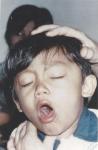 WEDNESDAY, July 19 (HealthDay News) -- Contrary to popular belief, humid air does not relieve the coughing and wheezing of croup in children, a new study shows.
"Typically, you get people to run a hot bath or shower in the bathroom. Or you get them to boil a kettle in the room, or have hot water in the corner of the room. That's the kind of first-aid advice that is often given at the point of first contact with a health-care professional," lead reviewer Dr. Michael Moore, a family doctor at Three Swans Surgery in Salisbury, England, said in a prepared statement.
In the study, published in the current issue of The Cochrane Library, Moore and his colleagues analyzed data from three studies of 135 children with croup who were seen in a hospital emergency department.
The outcomes for children treated with moist air did not differ significantly from those who received no treatment, the researchers found.
"We haven't shown any benefit from using the moisturized air in the emergency department, and there's no particular reason to think that it would work better at home," Moore said.
Croup, usually caused by a viral infection, leads to swelling in the upper part of the airway and affects the voice box. Because they have narrower airways than older children and adults, young children are especially susceptible to croup.
"I think that probably the successes that were attributed to humidity in the past were due to the calming effect of the parent believing that they were doing something, the child taking deeper breaths, the child getting over the spasmodic element of the croup, and then just getting better," Dr. Dennis Scolnik, an emergency room pediatrician at The Hospital for Sick Children in Toronto, Canada, said in a prepared statement.
"I think humidity probably wouldn't harm. But I think it's a false sense of security," he added.
There are medical treatments for serious cases of croup, he added.
More information
The Nemours Foundation has more about croup.
Last reviewed: 07/19/2006 Last updated: 07/19/2006
Subscribe to:
Posts (Atom)
Dr. Group's Secret to Health Kit$39.94  Dr. Group's Secret to Health Kit offers simple at-home solutions for cleansing internally and externally thereby reducing toxins, restoring the body's natural healing process, and helping you achieve true health and happiness. |